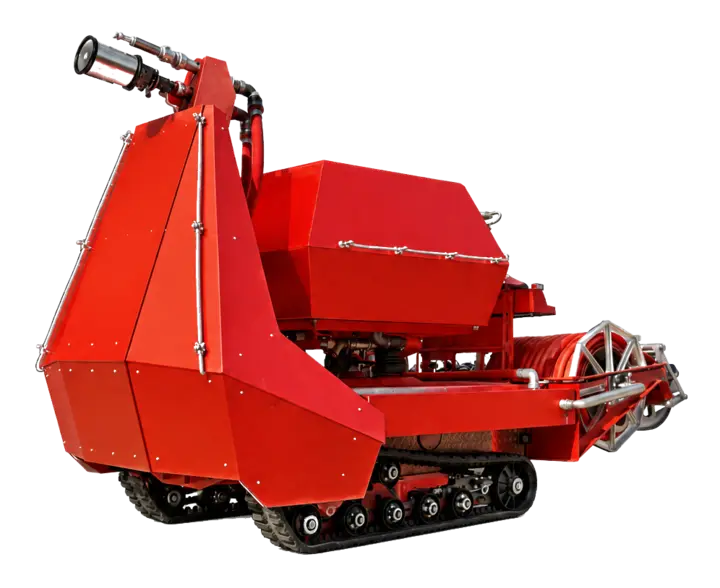
Robotski sistem za gašenje požarov je robotski sistem za gašenje požarov mobilna platforma, upravljana na daljavo, lahko tudi s podpornimi ali avtonomnimi funkcijami, ki gasilsko, zaznavno in komunikacijsko opremo prenese na območja, ki so za neposreden vstop osebja lahko preveč nevarna ali težko dostopna. Njen namen ni nadomestiti gasilcev, temveč povečati njihov doseg, izboljšati situacijsko zavedanje in približati zmogljivost gašenja nevarnosti, medtem ko upravljavci ostanejo na varnejši razdalji.
Kaj je robotski sistem za gašenje požarov?
Robotski sistem za gašenje požarov združuje mobilno robotsko platformo z opremo za zaznavanje požara, izvidovanje in gašenje. Glede na zasnovo lahko robot prevaža sistem z vodo ali peno, daljinsko upravljan gasilski monitor, termalne in optične kamere, komunikacijsko opremo ter pomoč pri navigaciji. Sistem je nato mogoče voziti ali usmerjati proti mestu dogodka, ne da bi moral biti gasilec fizično ob platformi.
Ključna razlika med gasilskim robotom in običajnim gasilskim vozilom je v tem, kje mora biti upravljavec. Gasilno vozilo običajno pripelje ekipo in opremo do območja dogodka. Robotski gasilski sistem pa se lahko premakne dlje v nevarno območje in deluje bližje vročini, dimu, ruševinam ali drugim nevarnostim, medtem ko ga upravljavec nadzoruje z varne razdalje.
Zato so robotski sistemi še posebej uporabni v zgodnji in najbolj negotovi fazi dogodka, ko reševalci še ne vedo, ali obstaja nevarnost eksplozije, porušitve konstrukcije, izpostavljenosti strupenim snovem ali hitrega spreminjanja požarnih razmer.
Kako deluje gasilski robot?
Večina sistemov temelji na štirih funkcijah: mobilnosti, zaznavanju, komunikaciji in gašenju. Te funkcije delujejo skupaj, da lahko robot doseže nevarno območje, upravljavcu prikaže dogajanje ter izvede ustrezen gasilski odziv.
1. Mobilna robotska platforma
Osnovna platforma nosi gasilsko opremo in omogoča premikanje sistema po območju delovanja. Gosenične platforme se pogosto uporabljajo tam, kjer so prisotni zahtevni teren, ruševine, klančine ali poškodovane površine, saj razporedijo maso na večjo kontaktno površino in omogočajo stabilno premikanje pri nizki hitrosti.
2. Kamere in situacijsko zavedanje
Kamere vidnega spektra in termalne kamere upravljavcu pomagajo določiti lokacijo požara, spremljati razmere v okolici in oceniti, ali je dostopna pot še vedno uporabna. Termalno slikanje lahko razkrije toplotne vzorce, ki jih je v dimu ali pri slabi vidljivosti s standardno kamero težko zaznati, vendar sta kakovost slike in natančnost meritev še vedno odvisni od kamere in požarnega okolja.
3. Daljinska komunikacija in upravljanje
Zanesljiva komunikacijska povezava omogoča upravljavcu vodenje vozila, usmerjanje gasilskega monitorja ter sprejem videa in sistemskih podatkov v živo. Daljinsko upravljanje ohranja odločanje v rokah usposobljenega osebja, hkrati pa zmanjšuje potrebo, da bi bilo to osebje neposredno v nevarnem območju.
4. Oprema za gašenje
Platforma lahko prevaža vodo, peno ali drugo gasilno sredstvo, za daljše delovanje pa se lahko priključi tudi na zunanji vir vode. Daljinsko upravljan monitor usmerja curek proti požaru. Natančna konfiguracija je odvisna od naloge: industrijski objekt, predor, skladišče goriva ali oddaljen objekt lahko zahtevajo zelo različne koristne tovore in postopke delovanja.
Kako se gasilski robot uporabi med intervencijo?
Robotski gasilski sistem je najbolj uporaben, ko je vključen v načrt intervencije in ni obravnavan kot samostojen stroj. Natančen postopek je odvisen od lokacije in vrste požara, običajna uporaba pa poteka približno takole:
1. Določite položaj upravljanja
Intervencijska ekipa izbere položaj za upravljanje zunaj neposrednega nevarnega območja, z zadostno vidljivostjo, komunikacijskim dosegom in dostopom za podporno opremo. Upravljavec potrebuje stabilno povezavo z robotom ter jasen pregled nad potjo do mesta dogodka.
2. Ocenite dostopno pot
Pred napredovanjem ekipa oceni stanje podlage, ruševine, klančine, vrata, pot cevi, prostor za obračanje in morebitne ovire. Gosenični robot lahko izboljša mobilnost na zahtevnem terenu, vendar so dimenzije dostopa in načrtovanje poti še vedno ključni.
3. Pošljite robota naprej na izvidovanje
Termalne in optične kamere je mogoče uporabiti za zaznavanje virov toplote, potrditev lokacije požara in spremljanje spreminjajočih se razmer. Takšno izvidovanje lahko zagotovi pomembne informacije, preden se gasilci približajo nevarnemu območju.
4. Začnite hlajenje ali gašenje
Ko je robot na položaju, lahko upravljavec usmeri gasilski monitor in začne dovajati vodo ali peno. Gasilno sredstvo lahko glede na sistem prihaja iz vgrajenih rezervoarjev, zunanjega dovoda ali obeh virov.
5. Spreminjajte položaj glede na razvoj dogodka
Požarne razmere se nenehno spreminjajo. Robot se lahko premakne, da zaščiti izpostavljeno opremo, izboljša kot curka, nadzira drugo območje ali ekipam ustvari varnejšo pot. Ključna prednost je, da je mogoče te prilagoditve izvajati, medtem ko upravljavec ostane dlje od neposredne nevarnosti.
Ta potek dela poudarja pomembno dejstvo: vrednost gasilskega robota izhaja iz kombinacije stroja, usposobljenih upravljavcev, komunikacij, oskrbe z gasilnim sredstvom in načrta intervencije. Sama strojna oprema še ne pomeni celovite robotske gasilske zmogljivosti.
Glavne komponente robotskega gasilskega sistema
Čeprav se zasnove razlikujejo, celovit robotski sistem za gašenje požarov običajno vključuje več naslednjih elementov:
- Robotsko podvozje: mobilna osnova, ki nosi gasilski koristni tovor in elektroniko.
- Gasilski monitor ali šoba: daljinsko usmerjana oprema za usmerjanje vode ali pene.
- Zmogljivost za vodo in peno: vgrajeni rezervoarji, priključek za zunanjo cev ali kombinacija obeh.
- Termalne in HD-kamere: vizualne informacije za navigacijo, prepoznavanje cilja in spremljanje dogodka.
- Sistem daljinskega upravljanja: komunikacija med robotom in upravljavcem na varnejši lokaciji.
- Funkcije navigacije in zaznavanja ovir: pomoč pri manevriranju v kompleksnih ali delno oviranih okoljih.
- Električni ali drug namenski pogon: izbran glede na zahteve glede vzdržljivosti, mobilnosti, vzdrževanja in naloge.
Ni pomembno, koliko tehnologij je na vozilu, temveč kako dobro delujejo skupaj v izrednih razmerah. Uporaben sistem mora biti hitro uporaben, obvladljiv in razumljiv tudi takrat, ko reševalci delajo pod časovnim pritiskom.
Kje se uporabljajo gasilski roboti?
Robotsko gašenje je najdragocenejše, ko dogodek združuje visoko tveganje in težaven dostop. Tipična okolja vključujejo industrijske obrate, skladišča, objekte za skladiščenje goriv in kemikalij, podzemne garaže, predore, logistična središča, letališča, energetsko infrastrukturo, vojaške objekte in oddaljene lokacije.
V teh okoljih je mogoče robota uporabiti za izvidovanje pred napredovanjem ekip, za hlajenje izpostavljene opreme, začetno gašenje ali vzdrževanje curka vode oziroma pene, medtem ko osebje upravlja širšo intervencijo. Cilj je ustvariti dodatno operativno možnost med neukrepanjem in takojšnjim pošiljanjem ljudi v območje največjega tveganja.
Za podrobnejši pregled posameznih načinov uporabe si oglejte kje se uporabljajo gasilski roboti ter naš vodnik o robotskem gašenju v nevarnih okoljih.
Daljinsko upravljani ali avtonomni gasilski roboti
»Robotski« ne pomeni vedno »popolnoma avtonomen«. Gasilski roboti lahko delujejo z različnimi stopnjami avtomatizacije, ustrezen pristop pa je odvisen od naloge, okolja in zahtevane ravni človeškega nadzora.
| Način delovanja | Kako deluje | Najprimernejše za |
|---|---|---|
| Daljinsko upravljanje | Človeški upravljavec neposredno nadzoruje premikanje in gasilske funkcije s pomočjo videa v živo in sistemskih povratnih informacij. | Kompleksne intervencije, pri katerih sta človeška presoja in neprekinjen nadzor ključna. |
| Podprto upravljanje | Upravljavec ohrani nadzor, sistem pa mu pomaga pri navigaciji, stabilnosti, zaznavanju ovir ali izbranih avtomatiziranih funkcijah. | Zmanjšanje obremenitve ob ohranjanju neposrednega človeškega nadzora. |
| Avtonomne funkcije | Izbrane naloge ali premike je mogoče samodejno izvesti znotraj določenih omejitev delovanja. | Ponovljive poti, vnaprej načrtovana uporaba ali okolja, kjer hiter avtomatiziran odziv prinaša dodatno vrednost. |
Pri odzivanju v izrednih razmerah je treba avtonomijo razumeti kot orodje in ne kot cilj sam po sebi. Človeški upravljavci še vedno potrebujejo jasno situacijsko zavedanje in možnost posredovanja. Več preberite v članku Daljinsko upravljani ali avtonomni gasilski roboti.
Katere so prednosti robotskega gašenja?
Glavna prednost je ločitev ljudi od tveganja: robot se lahko približa nevarnosti, medtem ko gasilci ostanejo dlje stran. Že ta ena zmogljivost prinaša več operativnih prednosti.
- Manjša neposredna izpostavljenost: osebje lahko ostane dlje od ekstremne vročine, dima, nevarnih snovi in nestabilnih konstrukcij.
- Zgodnejše izvidovanje: kamere in termalno slikanje lahko zagotovijo informacije, še preden se ekipa odloči za bližnji pristop.
- Dostop do težko dostopnih območij: kompaktne robotske platforme lahko dosežejo lokacije, kjer velikega intervencijskega vozila ni mogoče učinkovito namestiti.
- Neprekinjeno gašenje: robot lahko vzdržuje usmerjen curek, medtem ko reševalci usklajujejo druge dele intervencije.
- Stalna pripravljenost: namenski sistem je lahko nameščen na objektu z visokim tveganjem in pripravljen na hitro lokalno uporabo.
Te prednosti ne odpravljajo potrebe po usposobljenih gasilcih, vodenju intervencije ali običajni opremi. Gasilskega robota je najbolje razumeti kot dodatno sredstvo, ki lahko prevzame naloge, pri katerih so omejujoči dejavniki razdalja, dostop ali izpostavljenost.
Gasilski robot v primerjavi z običajno gasilsko opremo
Gasilski robot ne nadomešča gasilskega vozila, ekipe s cevjo ali usposobljene enote. Ima drugačno operativno vlogo. Običajna oprema je namenjena prevozu ljudi, vode, orodja in reševalnih zmogljivosti na mesto dogodka. Robot je predvsem dragocen takrat, ko želijo reševalci približati zaznavanje ali gašenje nevarnosti, ne da bi morali na enako razdaljo približati tudi osebje.
| Zmogljivost | Robotski sistem za gašenje požarov | Običajna gasilska oprema |
|---|---|---|
| Položaj upravljavca | Glede na komunikacijsko povezavo in zasnovo sistema ga je mogoče upravljati z varne razdalje. | Osebje opremo običajno upravlja na delovnem mestu ali v njegovi neposredni bližini. |
| Glavna prednost | Zmanjševanje izpostavljenosti med izvidovanjem, hlajenjem in gašenjem na območjih z visokim tveganjem. | Prilagodljiv človeški odziv, reševanje, razporeditev cevi, prezračevanje in celovito izvajanje intervencije. |
| Dostop | Lahko vstopi v nekatera omejena, nevarna ali z ruševinami prizadeta območja, kjer večjih vozil ni mogoče namestiti. | Gasilska vozila zagotavljajo večjo nosilnost in podporne zmogljivosti, vendar zahtevajo dostop za vozilo in ustrezno postavitev ekipe. |
| Situacijsko zavedanje | Termalne in optične kamere lahko pripelje neposredno bližje nevarnosti. | Ekipe uporabljajo ročne kamere, sisteme na vozilih in neposredno opazovanje. |
| Najprimernejša uporaba | Naloge z veliko izpostavljenostjo, pri katerih je pomembno ohranjati razdaljo od vročine, dima, nevarnosti eksplozije ali nestabilnih konstrukcij. | Splošno gašenje, reševanje, vodenje, logistika ter naloge, ki zahtevajo človeško presojo ali ročne spretnosti. |
Najbolj učinkovit model uporabe je zato dopolnjujoč: robot prevzame izbrane naloge z visoko izpostavljenostjo, gasilci pa ohranijo vodenje, reševalne zmogljivosti in nadzor nad celotno intervencijo.
Zakaj so roboti pomembni v nevarnih okoljih
Nekateri požari povzročajo nevarnosti, ki segajo daleč prek samih plamenov. Izpusti kemikalij lahko ustvarijo strupeno atmosfero. Skladiščenje goriva ali streliva lahko poveča nevarnost eksplozije. Požari baterij in industrijski incidenti lahko povzročijo izjemno vročino, slabo vidljivost ali potrebo po dolgotrajnem hlajenju. Poškodovane stavbe pa lahko predstavljajo nevarnost padajočih ruševin in porušitve.
V takšnih razmerah lahko daljinsko upravljana oprema reševalcem pomaga pridobiti informacije in začeti gašenje, ne da bi bil neposreden vstop ljudi prvi korak. To je še posebej dragoceno, ko se razmere hitro spreminjajo in najvarnejša dostopna pot ni jasna.
Enako načelo velja za kritično infrastrukturo: hitreje ko reševalci razumejo dogodek in začnejo nadzorovan odziv, večja je možnost omejitve njegovega stopnjevanja, ob tem pa osebje ostane zunaj najnevarnejšega območja.
Kaj naj organizacije ocenijo pri izbiri robotskega sistema za gašenje požarov?
Ni ene same tehnične lastnosti, ki bi določala, ali je gasilski robot primeren za določeno lokacijo. Ustrezen sistem je odvisen od nevarnosti, dostopnih poti, pričakovane razdalje delovanja in načina dela lokalne intervencijske ekipe. Pomembna merila vključujejo:
- Mobilnost in teren: širino, obračalni radij, oddaljenost od tal, zasnovo gosenic ali koles, zmogljivost na naklonih ter delovanje na ruševinah ali neravnih površinah.
- Zmogljivost gašenja: količino vode in pene na vozilu, tlak črpalke, doseg monitorja, priključek na zunanji vir vode ter pričakovano trajanje delovanja.
- Situacijsko zavedanje: ločljivost termalne kamere, kamere vidnega spektra, kote pogleda, osvetlitev in informacije, ki so na voljo upravljavcu.
- Komunikacijski doseg: zanesljiv prenos ukazov in videa v dejanskem okolju, vključno z zgradbami, podzemnimi območji ali ovirami, ki lahko vplivajo na vidno povezavo.
- Hitrost uporabe: kako hitro lahko sistem iz stanja pripravljenosti preide v učinkovito delovanje na mestu dogodka.
- Vzdržljivost in napajanje: čas delovanja baterije ali zalogo goriva, zahteve glede polnjenja in sposobnost ohranjanja pripravljenosti med dolgotrajnimi intervencijami.
- Zaščita pred vročino in vplivi okolja: kako so platforma, elektronika, kamere in kabli zaščiteni pri delovanju v bližini sevalne toplote, vode, prahu ali v kontaminiranih okoljih.
- Servis in usposabljanje: usposabljanje upravljavcev, zahteve glede vzdrževanja, rezervne dele in razpoložljivost tehnične podpore po nakupu.
Za upravljavce industrijskih objektov in infrastrukture bi moral dober nabavni postopek vključevati predstavitev na konkretni lokaciji. Robot, ki se dobro obnese na odprtem testnem poligonu, se lahko drugače vede v ozkih prehodih, med jeklenimi konstrukcijami, na podzemnih klančinah ali pri dolgih komunikacijskih poteh.
Kakšne so omejitve gasilskih robotov?
Robotsko gašenje ima jasne prednosti, vendar tudi praktične omejitve. Njihovo razumevanje je ključno pri načrtovanju uporabe sistema.
- Komunikacija je lahko ovirana: armirani beton, podzemne konstrukcije, razdalja in kompleksna industrijska okolja lahko zmanjšajo zmogljivost radijske povezave.
- Dostop ostaja fizično omejen: robot ne more skozi preozko odprtino, premagati vsake ovire ali se premikati skozi neomejeno količino ruševin.
- Količina gasilnega sredstva je omejena: vgrajeni rezervoarji zagotavljajo samostojnost, vendar jih je treba sčasoma ponovno napolniti; zunanje cevi lahko podaljšajo čas delovanja, vendar povečajo upor in omejujejo pot gibanja.
- Vročina vpliva na opremo: roboti lahko zmanjšajo izpostavljenost ljudi, vendar imajo kamere, baterije, tesnila, elektronika in druge komponente še vedno svoje meje delovanja.
- Upravljavci potrebujejo usposabljanje: učinkovita daljinska vožnja in upravljanje šobe v izrednih razmerah zahtevata vajo, zlasti pri slabi vidljivosti.
- Roboti ne izvajajo vseh gasilskih nalog: iskanje in reševanje, oskrba poškodovanih, nasilni vstop in zahtevna ročna opravila še vedno lahko zahtevajo ljudi in specializirano opremo.
Zaradi teh razlogov je treba robotski sistem za gašenje požarov vključiti v postopke za izredne razmere, usposabljanje in načrtovanje lokacije, ne pa ga obravnavati kot nadomestilo za običajne intervencijske zmogljivosti.
Robotski sistem za gašenje požarov PEK FFRS
Sistem FFRS Robotski sistem za gašenje požarov PEK FFRS je popolnoma električna robotska gasilska platforma, razvita za civilno zaščito in odzivanje v izrednih razmerah z visokim tveganjem. V eni platformi združuje lastno zalogo gasilnega sredstva, daljinsko upravljanje, termalno in HD-situacijsko spremljanje ter gosenično mobilnost.
Trenutna konfiguracija FFRS vključuje 1.500-litrski rezervoar za vodo, ločen 170-litrski rezervoar za peno, tlak gašenja do 16 bar, termalno kamero LWIR 640 × 480 in možnost daljinskega upravljanja do 1.000 m v vidni liniji, odvisno od pogojev delovanja. Gosenična platforma je zasnovana za zahtevne površine in lahko deluje na naklonih do 15° s polnim rezervoarjem ter do 25° z zmanjšano obremenitvijo.
Sistem je namenjen okoljem, kjer lahko hiter lokalni odziv in upravljanje z varne razdalje zmanjšata izpostavljenost intervencijskega osebja, vključno z industrijskimi objekti, skladišči goriva, vojaškimi lokacijami, podzemno infrastrukturo in drugimi območji z visokim tveganjem.
Raziščite PEK FFRS
Oglejte si celoten robotski sistem za gašenje požarov, vključno s tehničnimi podatki, gasilsko opremo, mobilnostjo, področji uporabe in zmogljivostmi daljinskega upravljanja.
Oglejte si robotski sistem za gašenje požarovPogosta vprašanja
Kakšen je namen gasilskega robota?
Njegov namen je približati zaznavne in gasilske zmogljivosti nevarnemu dogodku, medtem ko reševalcem omogoča delo z varnejše razdalje. Podpira lahko izvidovanje, hlajenje, gašenje in spremljanje na območjih, kjer neposredna izpostavljenost ljudi ni zaželena.
Ali lahko gasilski robot nadomesti gasilce?
Ne. Gasilski roboti so operativna orodja, ki podpirajo usposobljene reševalce. Človeška presoja, vodenje intervencije, reševanje in številne gasilske naloge še vedno zahtevajo ljudi. Robot je najdragocenejši, kadar lahko prevzame naloge z visoko izpostavljenostjo ali doseže lokacije, do katerih je varen dostop otežen.
Ali so gasilski roboti avtonomni?
Nekateri sistemi so daljinsko upravljani, drugi uporabljajo funkcije podprte navigacije, tretji pa lahko izvajajo izbrane avtonomne funkcije. Ustrezna stopnja avtonomije je odvisna od naloge in potrebne ravni človeškega nadzora.
Kaj lahko prevaža robotski sistem za gašenje požarov?
Glede na zasnovo lahko prevaža rezervoarje za vodo ali peno, črpalke, daljinsko upravljan gasilski monitor, termalne in optične kamere, komunikacijsko opremo ter druge senzorje ali module, prilagojene nalogi.
Kje so gasilski roboti najbolj uporabni?
Še posebej uporabni so v industrijskih, podzemnih, skladiščnih, logističnih, energetskih, vojaških in drugih okoljih, kjer vročina, dim, nevarnost eksplozije, nevarne snovi ali omejen dostop povečujejo tveganje za osebje.
Ali gasilski roboti potrebujejo cev?
Ne vedno. Nekateri robotski sistemi imajo lastno zalogo vode ali pene in lahko začnejo gašenje brez zunanje cevi. Drugi se za daljše delovanje priključijo na zunanji vir vode. Nekatere platforme podpirajo oba načina, odvisno od naloge.
Kakšna je razlika med gasilskim robotom in gasilskim vozilom?
Gasilno vozilo na mesto dogodka pripelje gasilce, vodo, orodje in reševalno opremo ter podpira širšo intervencijo. Gasilski robot je manjša platforma, upravljana na daljavo, včasih s podpornimi ali avtonomnimi funkcijami, ki zaznavne ali gasilske zmogljivosti približa nevarnemu območju, medtem ko upravljavec ostane dlje stran.
Tehnične reference: Splošne zmogljivosti in merila za ocenjevanje v tem vodniku so bila preverjena glede na program NIST za ocenjevanje zmogljivosti intervencijskih robotov ter njegovo delo na področju mobilnosti, zaznavanja, komunikacij, vmesnikov človek–robot, logistike in varnosti. Pojasnilo termalnega slikanja upošteva raziskave NIST o termalnem slikanju v gasilstvu. Podatki, specifični za PEK, so bili preverjeni glede na trenutne tehnične specifikacije FFRS.