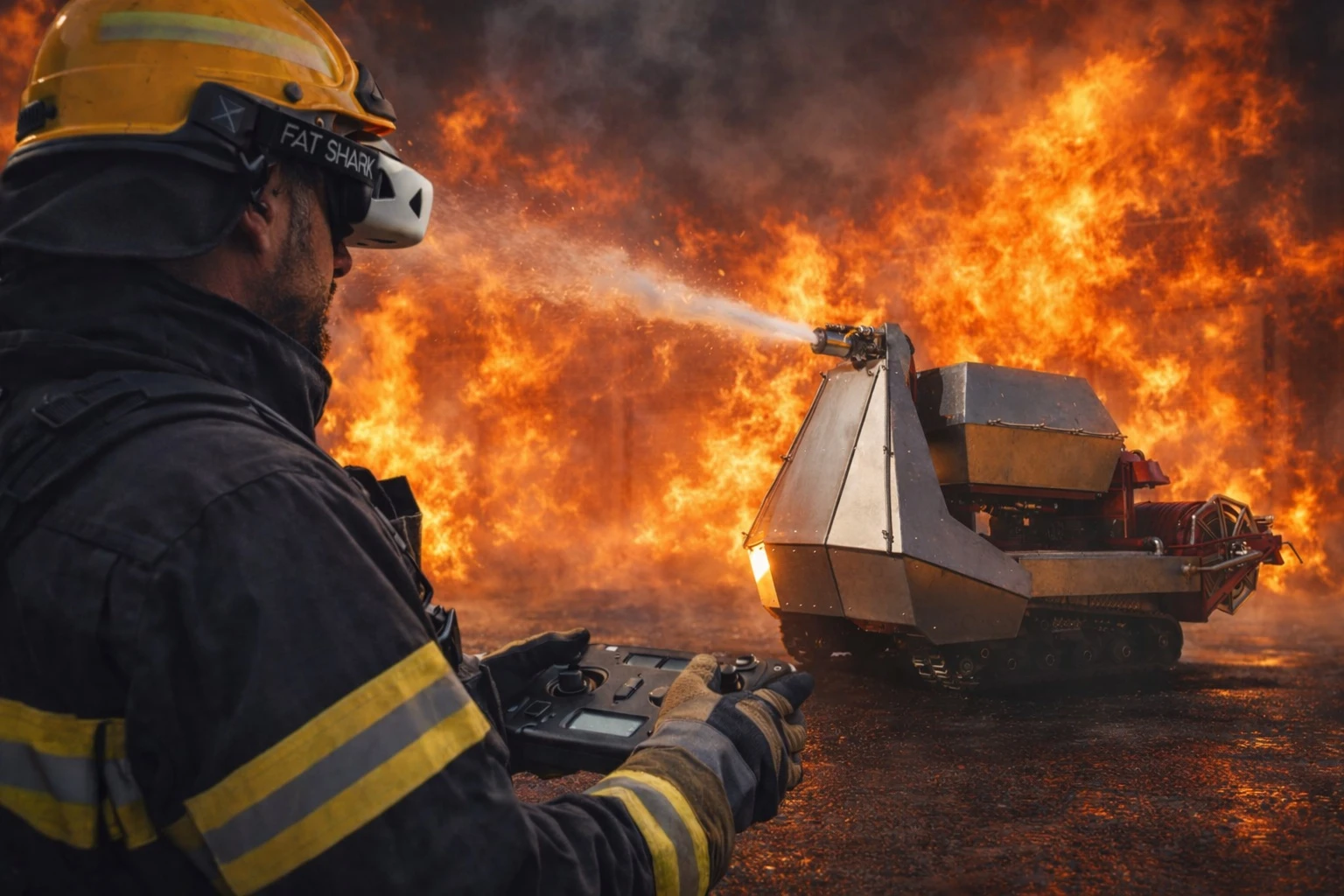
Daljinsko upravljan gasilski robot neprekinjeno sledi ukazom operaterja. Avtonomni gasilski robot izvaja določene funkcije z manj neprekinjenega vnosa operaterja. Pri visoko tveganih intervencijah nadzorovana avtonomija pogosto združuje avtomatizacijo z neposredno avtoriteto človeka in možnostjo takojšnjega ročnega prevzema upravljanja.
Daljinsko in avtonomno ni isto
Izraza daljinsko upravljan in avtonomen se pogosto uporabljata skupaj, vendar opisujeta različne zmogljivosti. Daljinsko upravljan gasilski robot je neposredno pod nadzorom operaterja, ki odloča o gibanju platforme in usmerjanju gasilnega sistema. Avtonomni sistem lahko nekatere funkcije navigacije, pozicioniranja ali nalog izvaja z manj stalnega vnosa operaterja.
Zakaj daljinsko upravljanje ostaja pomembno
Intervencijska okolja so nepredvidljiva. Ruševine se lahko premaknejo, vidljivost spremeni, taktične prioritete pa hitro zamenjajo. Neposredno daljinsko upravljanje daje operaterju takojšen nadzor nad gibanjem in gašenjem. Zato je temeljna zmogljivost visoko tveganih gasilskih robotov, zlasti v prvih minutah incidenta.
Kje lahko pomaga avtonomija
Avtonomne funkcije so koristne, kadar zmanjšujejo ponavljajočo se obremenitev ali pomagajo robotu zanesljivo premikanje po znanem operativnem območju. Primeri vključujejo asistiranu navigacijo, gibanje med točkami, zaznavanje ovir ali usklajeno delovanje več platform. Cilj ni avtonomija sama po sebi, temveč hitrejši, varnejši in lažje obvladljiv odziv.
Človeški nadzor ostaja ključen
Pri gašenju je najprimernejša arhitektura pogosto nadzorovana avtonomija. Sistem lahko pomaga pri izbranih funkcijah, usposobljeno osebje pa ohrani nadzor nad taktičnimi odločitvami. Tako se ohranijo prednosti avtomatizacije, ne da bi iz dinamičnega intervencijskega okolja odstranili človeško presojo.
Kaj ocenjevati pri robotskem sistemu
Pri primerjavi gasilskih robotov se kupci ne smejo ustaviti pri oznaki »avtonomen«. Zanesljivost komunikacije, uporabniški vmesnik, kakovost kamer, termovizija, varno vedenje ob odpovedi, mobilnost in možnost preklopa med asistiranim ter neposrednim upravljanjem so lahko pomembnejši od same oznake avtonomije.
Koncept delovanja FFRS
PEK FFRS temelji na daljinskem upravljanju z varne razdalje in inteligentnih funkcijah sistema, namenjenih izboljšanju hitrosti odziva in koordinacije. Arhitektura ohranja operaterja v vodilni vlogi, vgrajeni senzorji in krmilna tehnologija pa razširjajo zmogljivost na območja, ki niso varna za neposreden dostop ljudi.
Primerjava daljinskega upravljanja in avtonomije
| Način delovanja | Kaj sistem izvaja | Kje pomaga | Kaj ostane pod nadzorom operaterja |
|---|---|---|---|
| Neposredno daljinsko upravljanje | Neprekinjeno sledi ukazom operaterja za gibanje in gašenje | Nestrukturirani incidenti, ki se hitro spreminjajo | Stalen nadzor poti, položaja in monitorja |
| Asistirano upravljanje | Operaterju pomaga s stabilizacijo, zaznavanjem ovir ali navigacijskimi pripomočki | Zmanjšanje obremenitve brez predaje nadzora nad nalogo | Odločitve o nalogi in takojšen ročni prevzem |
| Nadzorovana avtonomija | Izvede omejeno nalogo, kot je sledenje poti ali zadrževanje položaja | Znane naloge z jasnimi omejitvami in nadzorom | Odobritev, nadzor in posredovanje |
| Višja stopnja avtonomije | Na podlagi podatkov senzorjev načrtuje in izvede večji del naloge | Specializirani in validirani scenariji | Cilji naloge, varnostne meje in pravica do prekinitve |
Avtonomija je nabor funkcij, ne ena oznaka
Dva izdelka, opisana kot avtonomna, se lahko obnašata zelo različno. Eden se lahko med vožnjo operaterja izogiba oviram, drugi samostojno navigira med točkami, tretji pa se usklajuje z drugimi platformami. Kupci naj vprašajo, katere funkcije so avtomatizirane, pod katerimi pogoji, kako sistem sporoča negotovost in kdaj zahteva posredovanje operaterja.
Pri gašenju je treba vodni monitor in gasilno sredstvo obravnavati ločeno od navigacije vozila. Avtonomno gibanje ne pomeni samodejno tudi avtonomnega zaznavanja požara, izbire cilja ali uporabe gasilnega sredstva. Vsaka funkcija mora imeti lastne omejitve in pravila človeškega nadzora.
Ročni prevzem in varno vedenje ob odpovedi
Uporabna avtonomna funkcija mora ob odpovedi preiti v varno stanje. Ekipe naj preverijo, kako hitro lahko operater prevzame nadzor, kaj se zgodi ob izgubi lokalizacije ali komunikacije, ali se platforma ustavi pred vstopom v izključitveno območje ter kako sta v upravljanju ločena gibanje in gašenje. Ta vprašanja so pomembnejša od odstotka avtonomije.
- Ali je neposredno ročno upravljanje vedno na voljo?
- Kateri vhodi povzročijo premor ali ustavitev avtonomne naloge?
- Kako operater vidi načrtovano pot sistema in njegovo trenutno stanje?
- Kaj se zgodi z monitorjem in črpalko ob prekinitvi komunikacije?
- Ali se lahko platforma po napaki vrne ali jo je mogoče varno umakniti?
Kateri način delovanja naj izbere gasilska služba?
Izberite najpreprostejši način, ki zanesljivo izvede predvideno nalogo. Neposredno daljinsko upravljanje je pogosto primerno za nepredvidljive dogodke, kjer usposobljen operater potrebuje takojšen nadzor. Asistirane ali nadzorovane funkcije so lahko koristne pri ponavljajočem se gibanju, upravljanju cevi, usklajenem pozicioniranju ali zmanjševanju obremenitve. Višja stopnja avtonomije mora biti vezana na jasno opredeljeno okolje, dokaze validacije in postopek ročnega prevzema.
Praktično vprašanje pri nabavi zato ni »Ali je avtonomen?«, temveč »Katere naloge lahko izvede, v katerih pogojih, s kakšnimi dokazi in kaj se zgodi, ko predpostavke ne držijo?«
Za komponente sistema in potek uporabe začnite z celotnim vodnikom po gasilskem robotskem sistemu. Za omejitve v dejanskih operativnih razmerah preberite gasilski roboti v nevarnih okoljih.
Pogosta vprašanja
Ali je daljinsko upravljan gasilski robot avtonomen?
Ne. Daljinsko upravljana platforma sledi ukazom operaterja. Lahko vključuje avtonomne ali asistirane funkcije, vendar morajo biti te funkcije opisane ločeno.
Kaj je nadzorovana avtonomija?
Nadzorovana avtonomija pomeni, da sistem izvaja omejeno nalogo, medtem ko človek spremlja napredek, določa omejitve ter lahko posreduje ali neposredno prevzame upravljanje.
Zakaj ne bi bil vsak gasilski robot popolnoma avtonomen?
Požarišča so dinamična in jih je težko modelirati. Višja stopnja avtonomije zahteva zanesljivo zaznavanje, validirano vedenje, jasne operativne omejitve in varno rezervno možnost, ko okolje ne ustreza več predpostavkam.
Kateri način je najvarnejši?
Noben način ni samodejno najvarnejši. Varnost je odvisna od naloge, okolja, komunikacij, usposobljenosti operaterja, varnega vedenja ob odpovedi in tega, ali je bila izbrana avtomatizacija validirana za konkretne pogoje.
Raziščite PEK Fire Fighting Robotic System
Oglejte si platformo FFRS, tehnične specifikacije, gasilni sistem, mobilnost in zmogljivosti daljinskega upravljanja.
Raziščite daljinsko in avtonomno platformo FFRS