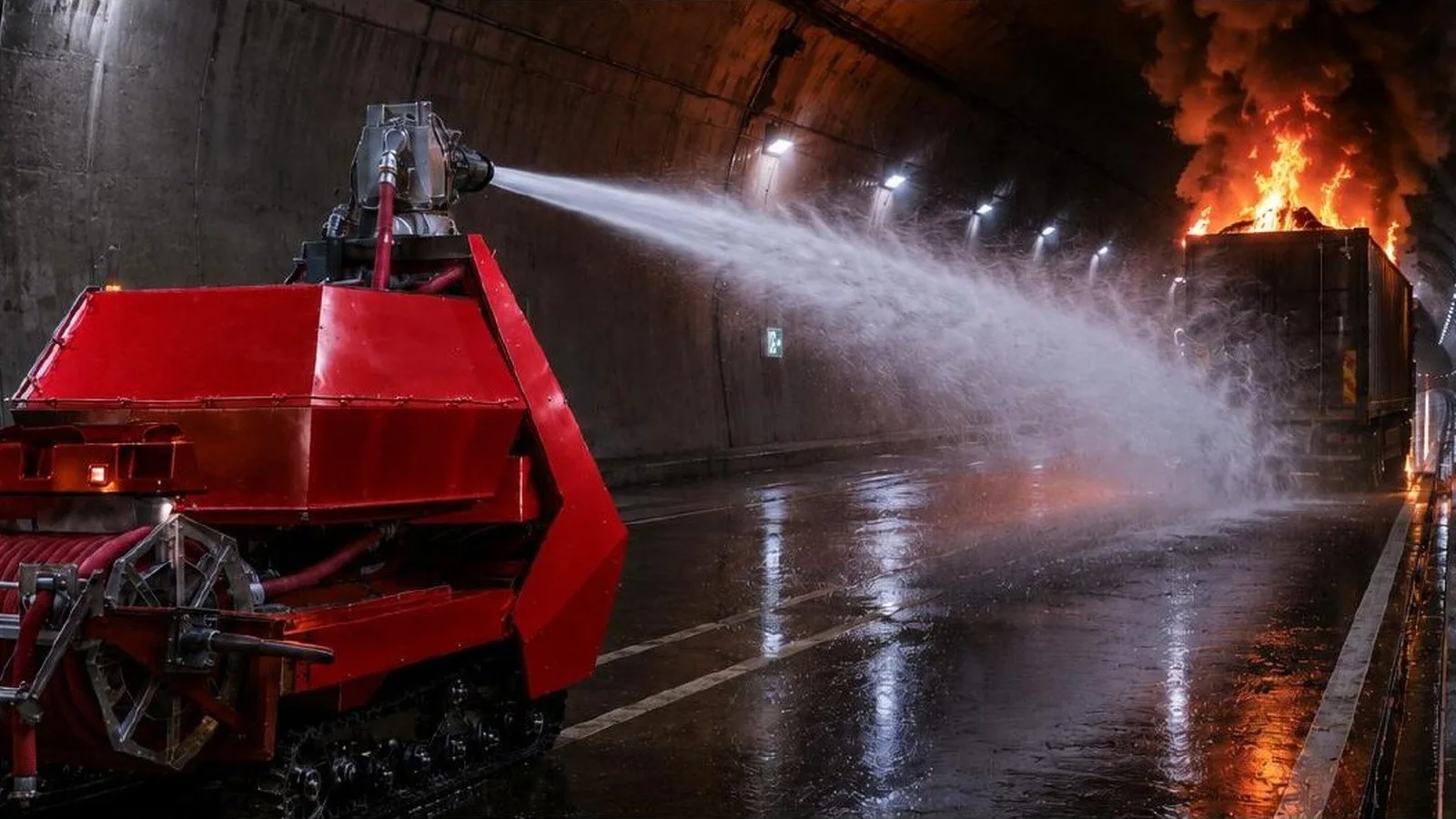
Industrijski gasilski robot je mobilna platforma za gašenje in zaznavanje, ki se upravlja z varne razdalje. Ekipam lahko pomaga oceniti razmere, hladiti izpostavljene objekte ali začeti gašenje v tovarnah, skladiščih, objektih za gorivo in kritični infrastrukturi, ne da bi moral biti operater ob stroju.
Zakaj so industrijski požari drugačni
Industrijski požari lahko vključujejo velike požarne obremenitve, stroje, sisteme pod tlakom, električno opremo, kemikalije in omejen dostop. Ti dejavniki lahko prvi pristop naredijo posebej nevaren. Industrijski gasilski robot intervencijskim ekipam ponuja dodatno možnost: proti dogodku se najprej pošlje daljinsko upravljana gasilska platforma, preden je osebje izpostavljeno enakim razmeram.
Gašenje z varne razdalje
Ena najpomembnejših uporab industrijskega gasilskega robota je delovanje z varne razdalje. Namesto da je operater ob vodnem monitorju ali cevi, gasilni sistem nosi robot, ki ga je mogoče upravljati na daljavo. To lahko zmanjša izpostavljenost vročini, dimu, ruševinam in nenadnim spremembam obnašanja požara.
Mobilnost je enako pomembna kot pretok vode
Robot je uporaben le, če lahko doseže območje, kjer je gašenje potrebno. Industrijske lokacije lahko vsebujejo robnike, rampe, ozke prehode, neravne površine in ruševine. Zato so oprijem, stabilnost in okretnost pri nizki hitrosti enako pomembni kot sam vodni monitor. Cilj je nadzorovano pozicioniranje v zahtevnih razmerah, ne zgolj velika hitrost.
Senzorji izboljšajo odločanje
Termovizija in kamere visoke ločljivosti zagotavljajo informacije, ki jih običajen brezposadkovni monitor ne more. Operaterji lahko s temi senzorji prepoznajo vire toplote, spremljajo razvoj požara in natančneje usmerjajo curek. Vizualne informacije na daljavo so koristne tudi, kadar dim ali razdalja otežujeta neposredno opazovanje.
Vključevanje robotike v načrt za izredne razmere
Gasilski robot je treba obravnavati kot del koncepta odzivanja objekta. Dostopne poti, komunikacijska pokritost, možnosti oskrbe z vodo, polnjenje in usposabljanje operaterjev je treba načrtovati še pred incidentom. Najuspešnejše uporabe so tiste, kjer ima robot vnaprej določeno operativno vlogo in ni obravnavan kot ločen kos opreme.
FFRS za industrijske intervencije
PEK Civil Defence je FFRS razvil za visoko tvegana okolja, kjer intervencijske ekipe potrebujejo zmogljivost gašenja brez neposredne izpostavljenosti ljudi. Integriran sistem za vodo in peno, električni pogon, daljinsko upravljanje ter termovizijsko/HD zaznavanje so namenjeni hitri uporabi pri industrijskih in infrastrukturnih incidentih.
Cilji industrijskega odzivanja in robotske funkcije
Objekti naj najprej določijo operativni cilj, nato pa izberejo robota in koristni tovor. Tako se prepreči, da bi nabava postala primerjava posameznih specifikacij, ki ne ustrezajo dejanskemu tveganju lokacije.
| Cilj odziva | Uporabna zmogljivost sistema | Vprašanje za načrtovanje |
|---|---|---|
| Oceniti razmere pred vstopom | Termovizijske in optične kamere z zanesljivo video povezavo | Ali lahko operater z mesta upravljanja prepozna požar, ovire in pot? |
| Hladiti izpostavljeno opremo | Stabilen mobilni monitor z ustreznim pretokom in nadzorom usmerjanja | Ali lahko curek doseže cilj s položaja, ki ga platforma lahko stabilno zadrži? |
| Hitro začeti gašenje | Vgrajeno gasilno sredstvo ali vnaprej načrtovan priklop na zunanji vir | Kaj je mogoče uporabiti takoj in kako dolgo? |
| Delovati v bližini vročine | Toplotna zaščita, spremljanje temperature in logika umika | Katera operativna meja in sprožilec umika bosta uporabljena? |
| Premikati se po poškodovani lokaciji | Oprijem, oddaljenost od tal in okretnost pri nizki hitrosti | Kateri del poti je najožji, najbolj strm in najmanj stabilen? |
Kako vključiti gasilskega robota v industrijski načrt za izredne razmere
Integracija se začne pred incidentom. Kartirajte dostopne poti, vodne priključke, položaje operaterjev in območja brez komunikacijskega signala. Določite manjši nabor nalog – na primer izvidovanje, hlajenje rezervoarjev ali gašenje v skladišču – in vsako nalogo vadite z enako podporno opremo, kot bi jo uporabili pri dejanski intervenciji.
- Kartirajte tveganja lokacije: prepoznajte nevarnosti vročine, eksplozije, izpusta strupenih snovi in konstrukcijske nevarnosti.
- Preverite dostop: izmerite vrata, prehode, rampe, prostor za obračanje in nosilnost površin.
- Določite oskrbo za gašenje: potrdite združljivost gasilnega sredstva, tlak, pretok in postopek priklopa.
- Preizkusite komunikacije: preverite delovanje upravljanja in video povezave v značilnih razmerah lokacije.
- Določite vloge: določite, kdo upravlja, opazuje, oskrbuje in odobri premik.
- Vadite scenarije odpovedi: vadite izgubo signala, blokiran dostop, zataknitev cevi in ročni umik.
Kontrolni seznam za izbiro industrijskega gasilskega robota
Sisteme primerjajte glede na dejansko pot in nalogo v objektu, ne na splošni demonstracijski površini. Pomembna merila vključujejo:
- mere platforme, maso, obračalni radij, oprijem in omejitve naklona;
- konfiguracijo vode in pene, pretok monitorja, doseg in območje usmerjanja;
- namestitev termovizijskih in optičnih kamer ter pregled operaterja;
- doseg upravljanja, zakasnitev, odpornost na motnje in varno vedenje ob odpovedi;
- toplotno zaščito, zaščito pred vdorom in servisiranje komponent;
- vzdržljivost baterije pod obremenitvijo, čas polnjenja in pripravljenost v stanju čakanja;
- transport, čas priprave, usposabljanje operaterjev in podporo vzdrževanju;
- dokumentirane preizkuse za konkretno obravnavano konfiguracijo.
Preizkus FFRS požara razreda A prikazuje, kako je mogoče rezultate preizkusa predstaviti skupaj z namenom, opaženim potekom in omejitvami. Je eden od vhodnih podatkov za ocenjevanje, ne nadomestilo za validacijo na konkretni lokaciji.
Operativne omejitve ostajajo pomembne
Industrijski robot ne more neznane atmosfere samodejno narediti varne, sam izbrati gasilnega sredstva ali zagotoviti komunikacije skozi vsako konstrukcijo. Njegova vrednost je odvisna od jasno določene naloge, usposobljenih operaterjev ter integracije z vodenjem intervencije in protipožarnimi sistemi objekta. Sistem, ki je odličen na širokem zunanjem procesnem območju, je lahko neprimeren za ozko notranjo pot.
Pogosta vprašanja
Kaj je industrijski gasilski robot?
To je mobilna, daljinsko upravljana ali delno avtonomna platforma, konfigurirana za prenos senzorjev in gasilne opreme v industrijska požarna okolja, medtem ko operaterji ostajajo dlje od neposredne nevarnosti.
V katerih industrijah se lahko uporabljajo gasilski roboti?
Možne uporabe vključujejo proizvodnjo, skladišča, kemično industrijo, skladiščenje goriv, energetiko, prometno infrastrukturo, letališča in druge lokacije, kjer nevarne snovi, vročina ali omejen dostop povečujejo izpostavljenost intervencijskih ekip.
Ali se lahko robot priključi na vodni vir objekta?
Številni sistemi lahko uporabljajo zunanji vodni vir, vendar je treba za konkretno platformo in objekt preveriti vrsto priklopa, tlak, pretok, pot cevi in vpliv upora cevi.
Kako naj kupci primerjajo gasilske robote?
Začnite z nalogo in potjo na lokaciji, nato pa kot celoten sistem primerjajte mobilnost, gašenje, zaznavanje, komunikacije, toplotno zaščito, vzdržljivost, varno vedenje ob odpovedi, usposabljanje in dokaze iz preizkusov.
Raziščite PEK Fire Fighting Robotic System
Oglejte si platformo FFRS, tehnične specifikacije, gasilni sistem, mobilnost in zmogljivosti daljinskega upravljanja.
Raziščite industrijski gasilski robot PEK