Gasilski roboti lahko premaknejo kamere, senzorje in gasilno opremo v nevarna območja, medtem ko usposobljeni operaterji ostanejo dlje od vročine, dima, ruševin ali morebitnega sekundarnega dogodka. Zmanjšujejo bližino nevarnosti, ne odpravijo pa potrebe po vodenju intervencije, ustrezni opremi in jasno določenih operativnih omejitvah.
Težava ni le požar, temveč izpostavljenost
Nekateri incidenti so nevarni zaradi samega požara. Drugi postanejo nevarni zato, ker se lahko okolje okoli požara brez opozorila spremeni. Strupen dim, eksplozije posod, nestabilne konstrukcije, goreče baterije, skladiščena goriva in poškodovana infrastruktura lahko običajen pristop spremenijo v visoko tvegano operacijo. Gasilski roboti zmanjšujejo to izpostavljenost tako, da gasilno opremo premaknejo bližje nevarnosti, operater pa ostane dlje stran.
Ekstremna vročina in dim
Sevalna toplota lahko omeji, kako blizu lahko ekipe delajo in kako dolgo lahko ostanejo na položaju. Gost dim lahko povsem onemogoči neposredno vidljivost. Robot s termovizijo in daljinsko usmerjanim vodnim monitorjem lahko zagotavlja uporabne informacije in gašenje tudi pri slabi vidljivosti.
Nevarnost eksplozije in sekundarnih dogodkov
Skladišča goriva, industrijski procesi, baterije, strelivo in sistemi pod tlakom lahko povzročijo sekundarne dogodke. Kadar nevarnost ni jasno opredeljena, je možnost daljinskega približevanja še posebej dragocena. Robot se lahko uporabi za hlajenje, opazovanje in začetno gašenje, preden se osebje približa.
Nestabilne ali poškodovane konstrukcije
Porušen material, poškodovane stavbe in ruševine lahko omejijo dostop večjih vozil. Kompakten kopenski robot lahko ponudi alternativno pot do mesta dogodka. Konstrukcijskega tveganja ne odpravi, lahko pa zmanjša potrebo, da bi bil intervencijski delavec med izvidovanjem ali začetnim gašenjem neposredno v istem območju.
Daljinsko upravljanje kot dodatna raven varnosti
Robotiko je treba obravnavati kot dodatno raven varnosti. Taktične odločitve še vedno sprejemajo gasilci; robot pa spremeni, kam je mogoče postaviti fizično gasilno platformo. Ta razlika je pomembna: sistem povečuje zmogljivost usposobljenih ekip in ne nadomešča vodenja intervencije ali strokovne gasilske presoje.
Platforma, zasnovana za posredovanje z varne razdalje
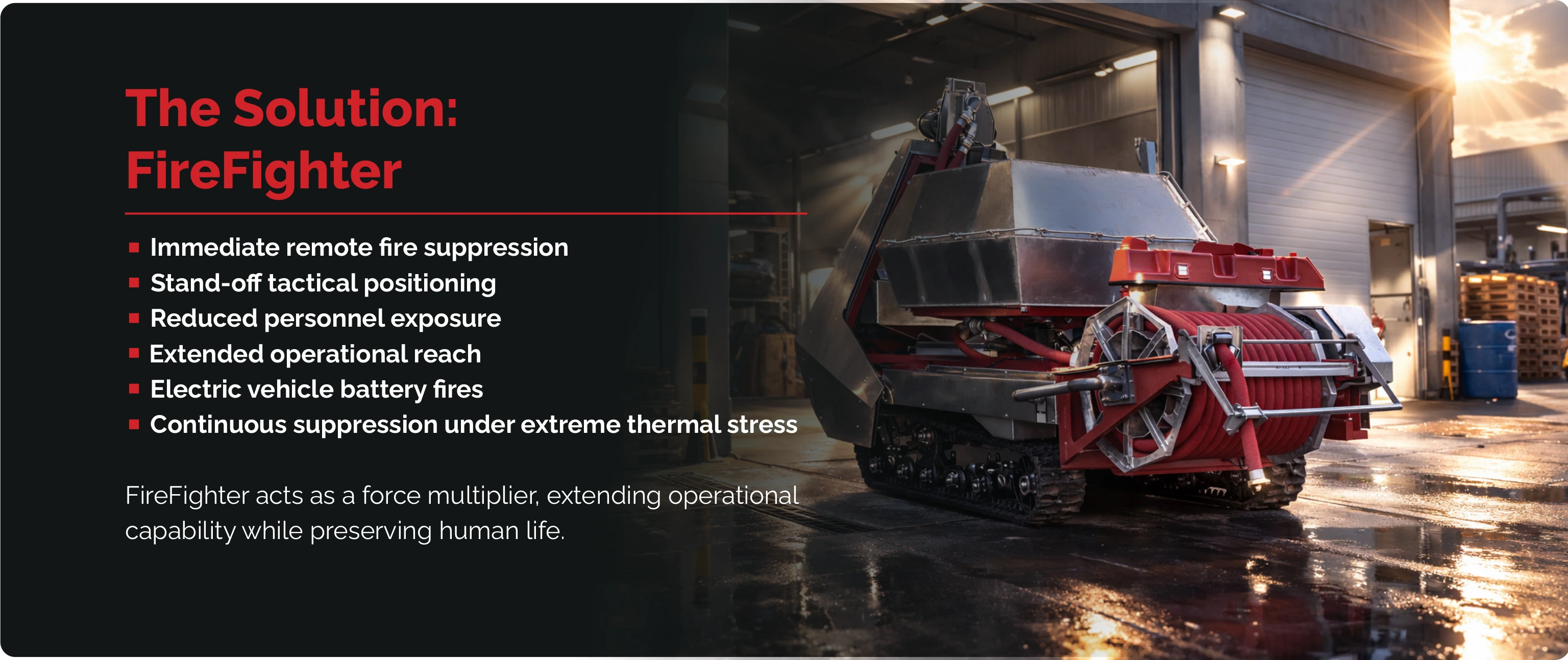
FFRS združuje daljinsko upravljanje, lastno gasilno zmogljivost, termovizijske in HD kamere ter električno gosenično platformo. Arhitektura je namenjena okoljem, kjer je prva naloga ustvariti razdaljo med osebjem in nevarnostjo, ne da bi pri tem izgubili možnost začetka gašenja.
Povezovanje nevarnosti z robotskimi funkcijami
Izraz nevarno okolje zajema zelo različne operativne težave. Uporaben načrt uporabe vsako prepoznano nevarnost poveže s konkretno funkcijo in merljivo operativno mejo.
| Nevarnost | Možen prispevek robota | Potreben nadzor |
|---|---|---|
| Sevalna toplota | Premik senzorjev ali gasilne opreme bližje, medtem ko osebje ostane dlje stran | Spremljanje temperature, meje zaščite in sprožilec za umik |
| Gost dim | Zagotavljanje termovizijskega in optičnega pogleda iz prizadetega območja | Čiščenje kamer, osvetlitev in komunikacijski načrt |
| Nevarnost eksplozije | Podpora hlajenju ali izvidovanju brez prisotnosti operaterja ob platformi | Ocena nevarnega območja in ustreznost opreme za atmosfero |
| Konstrukcijska nestabilnost | Opazovanje ali gašenje s položaja, ki zmanjšuje neposredno izpostavljenost ljudi | Ocena poti, izključitvena območja in načrt daljinskega umika sistema |
| Izpust strupenih snovi | Vnos združljivih senzorjev ali kamer v nadzorovano območje | Dekontaminacija, združljivost materialov in postopki ob izpostavljenosti |
Načrtovanje komunikacij, umika in reševanja
Daljinsko upravljanje zagotavlja zaščito le, dokler lahko operater nadzoruje stroj in razume njegovo stanje. Ekipe morajo prepoznati območja brez komunikacijskega signala, izbrati položaj za upravljanje, določiti odziv platforme ob izgubi signala in načrtovati njen umik brez ustvarjanja nove nevarnosti. Jasno določena pot umika je enako pomembna kot pot približevanja.
Pomembna varnostna vprašanja vključujejo, ali se gibanje ob izgubi signala ustavi, ali se gašenje nadaljuje ali zapre, kako se spremlja temperatura na vozilu in kako operater prejme opozorilo pred prekoračitvijo meje. Takšno vedenje sistema je treba preveriti med usposabljanjem, ne šele med intervencijo.
Ustreznost opreme mora biti prilagojena atmosferi
Ni mogoče predpostaviti, da je gasilski robot primeren za eksplozivno, kemično agresivno ali radiološko okolje samo zato, ker je daljinsko upravljan. Certifikacija, stopnja zaščite, združljivost materialov, električna zasnova in zahteve za dekontaminacijo so odvisne od predvidenega okolja. Odgovorni organ mora te zahteve preveriti za posamezno lokacijo in nalogo.
Ta razlika pomaga preprečiti tudi težave pri razumevanju in nabavi: »nevarno okolje« ni ena sama kategorija izdelkov. Sistem je treba opisati glede na nevarnosti, za katere je zasnovan in preizkušen, omejitve pa navesti skupaj z zmogljivostmi.
Česa robotsko gašenje ne more odpraviti
Roboti zmanjšujejo bližino nevarnosti, ne odpravijo pa dinamike požara, nevarnosti porušitve, nevarnih snovi ali tveganj vodenja intervencije. Osebje še vedno potrebuje načrt intervencije, ustrezno gasilno sredstvo, oskrbo z vodo, reševalno strategijo in rezervni načrt. Platforma naj predstavlja dodatno možnost med čakanjem in takojšnjim pošiljanjem ekip naprej, ne pa edine možnosti.
Za širši pregled področij uporabe preberite kje se uporabljajo gasilski roboti. Za arhitekturo upravljanja primerjajte daljinsko upravljane in avtonomne gasilske robote.
Pogosta vprašanja
Ali lahko gasilski robot vstopi v eksplozivno atmosfero?
Samo če je konkretna konfiguracija ocenjena in odobrena za takšno atmosfero. Samo daljinsko upravljanje električne ali mehanske opreme ne naredi protieksplozijsko zaščitene.
Kako termovizija pomaga v dimu?
Termovizijske kamere lahko pokažejo temperaturne vzorce, ki jih kamere vidnega spektra skozi dim ne zaznajo. So dodaten vir informacij, ne zagotovilo vidljivosti ali nadomestilo za taktično presojo.
Kaj se zgodi, če se izgubi krmilni signal?
Pričakovano vedenje mora biti določeno in preizkušeno – na primer zaustavitev gibanja, zadržanje ali zapiranje monitorja, opozorilo operaterju in omogočanje nadzorovanega umika. Natančno vedenje je odvisno od zasnove sistema.
Ali lahko roboti nadomestijo gasilce v nevarnih območjih?
Ne. Izvajajo lahko izbrane naloge izvidovanja ali gašenja, medtem ko ekipe ostanejo dlje stran, vendar usposobljeno osebje še vedno vodi intervencijo in opravlja naloge, ki jih platforma ne more.
Raziščite PEK Fire Fighting Robotic System
Oglejte si platformo FFRS, tehnične specifikacije, gasilni sistem, mobilnost in zmogljivosti daljinskega upravljanja.
Raziščite FFRS za posredovanje v nevarnih okoljih