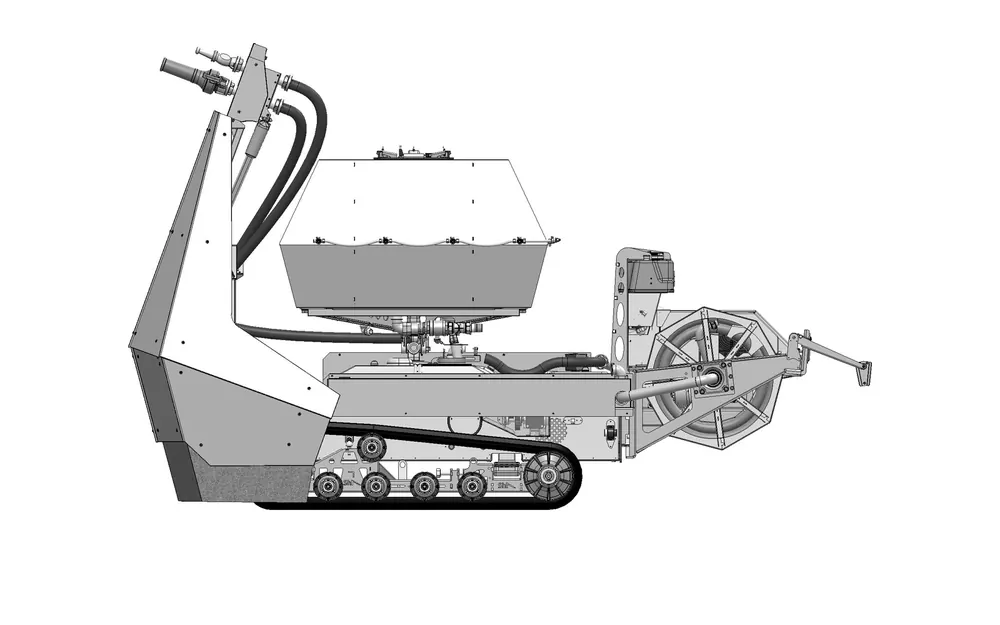
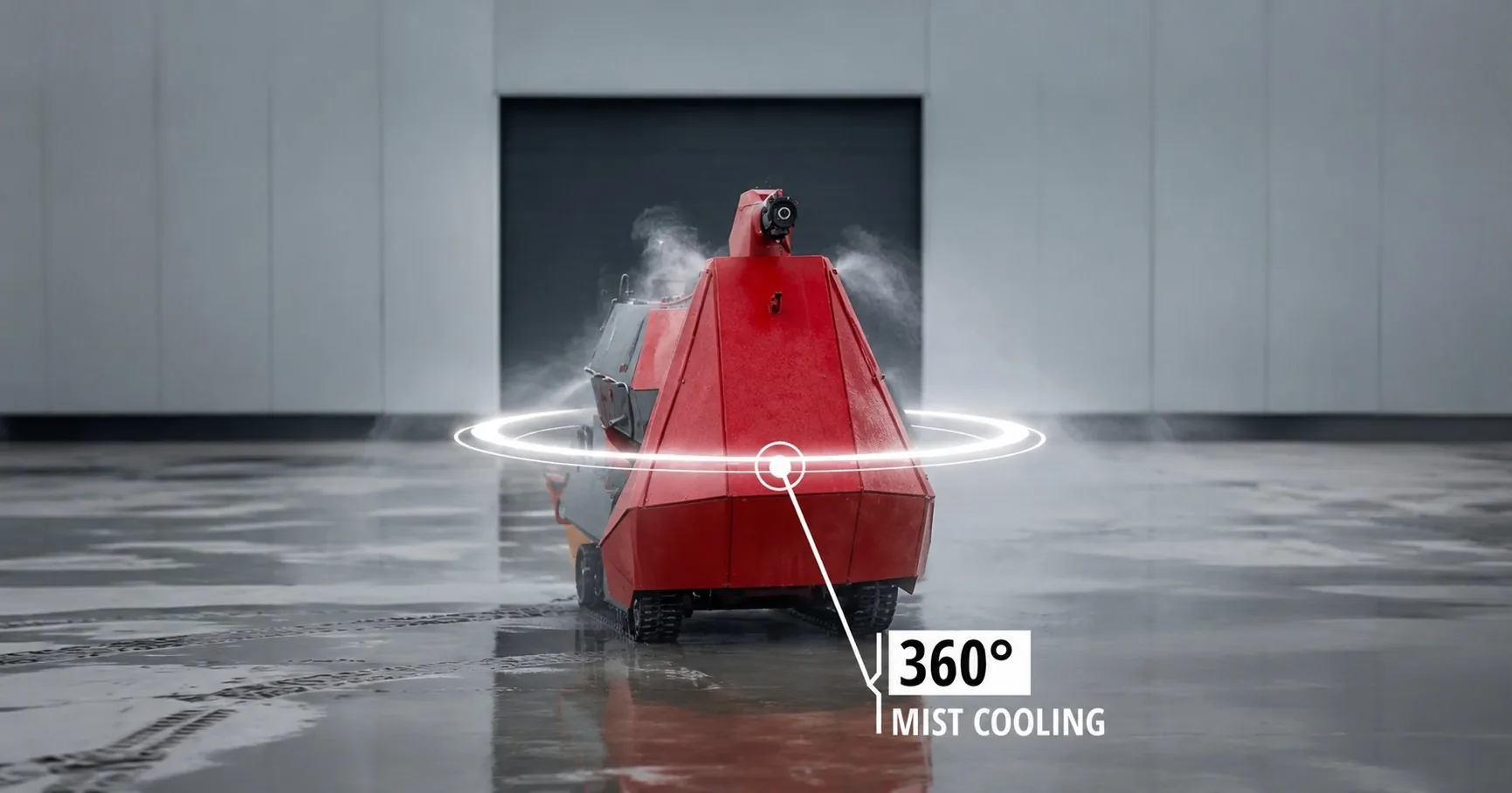
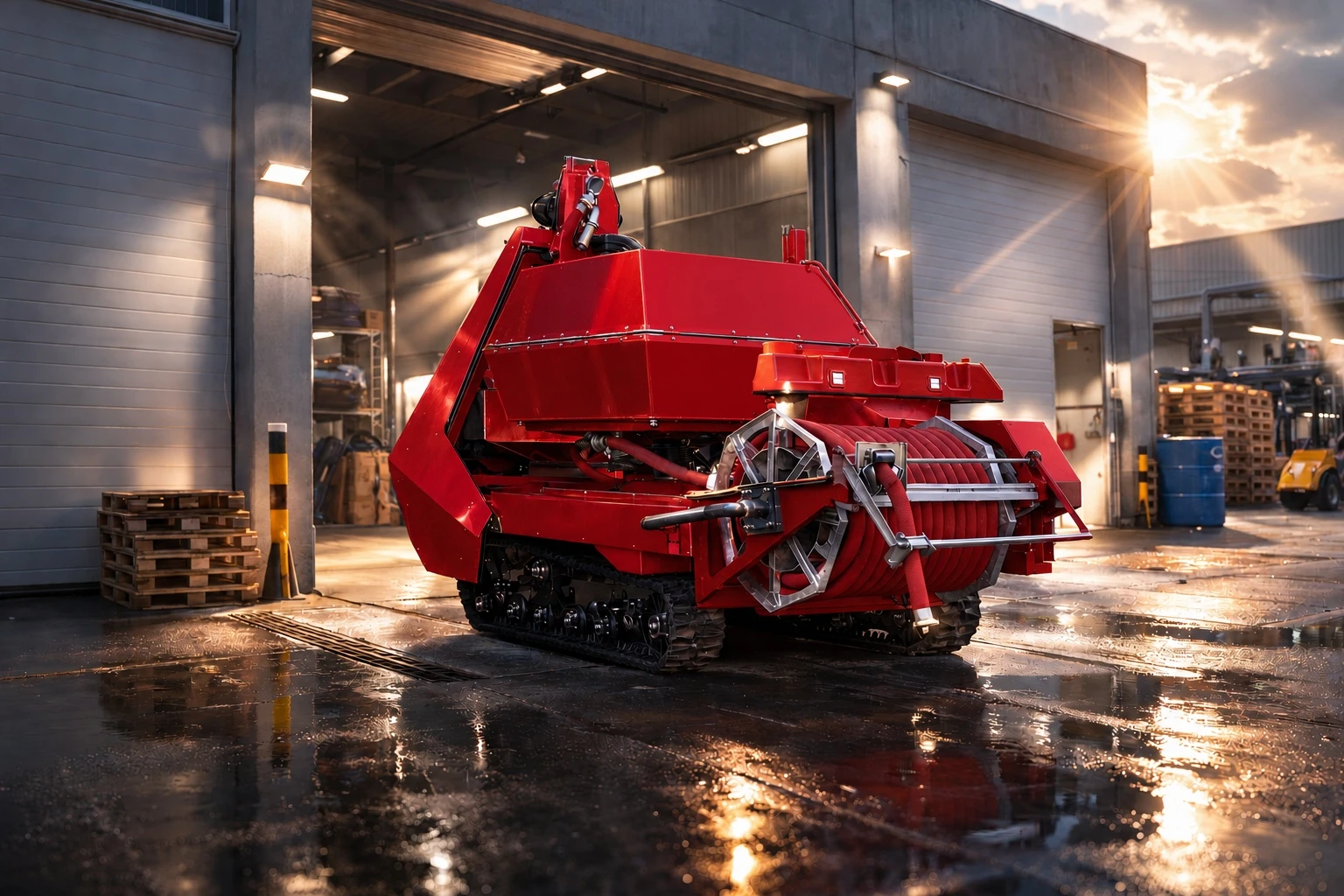
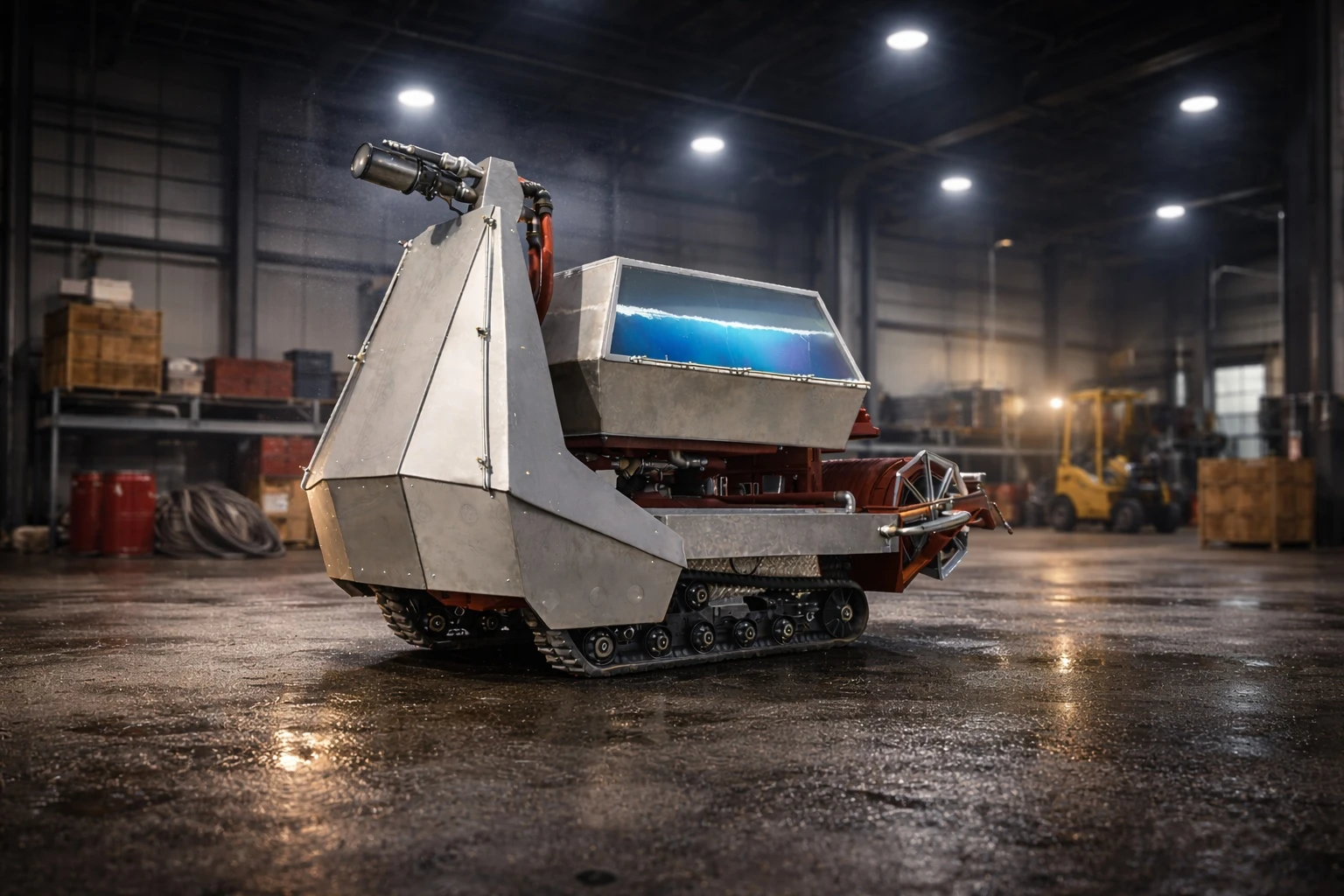
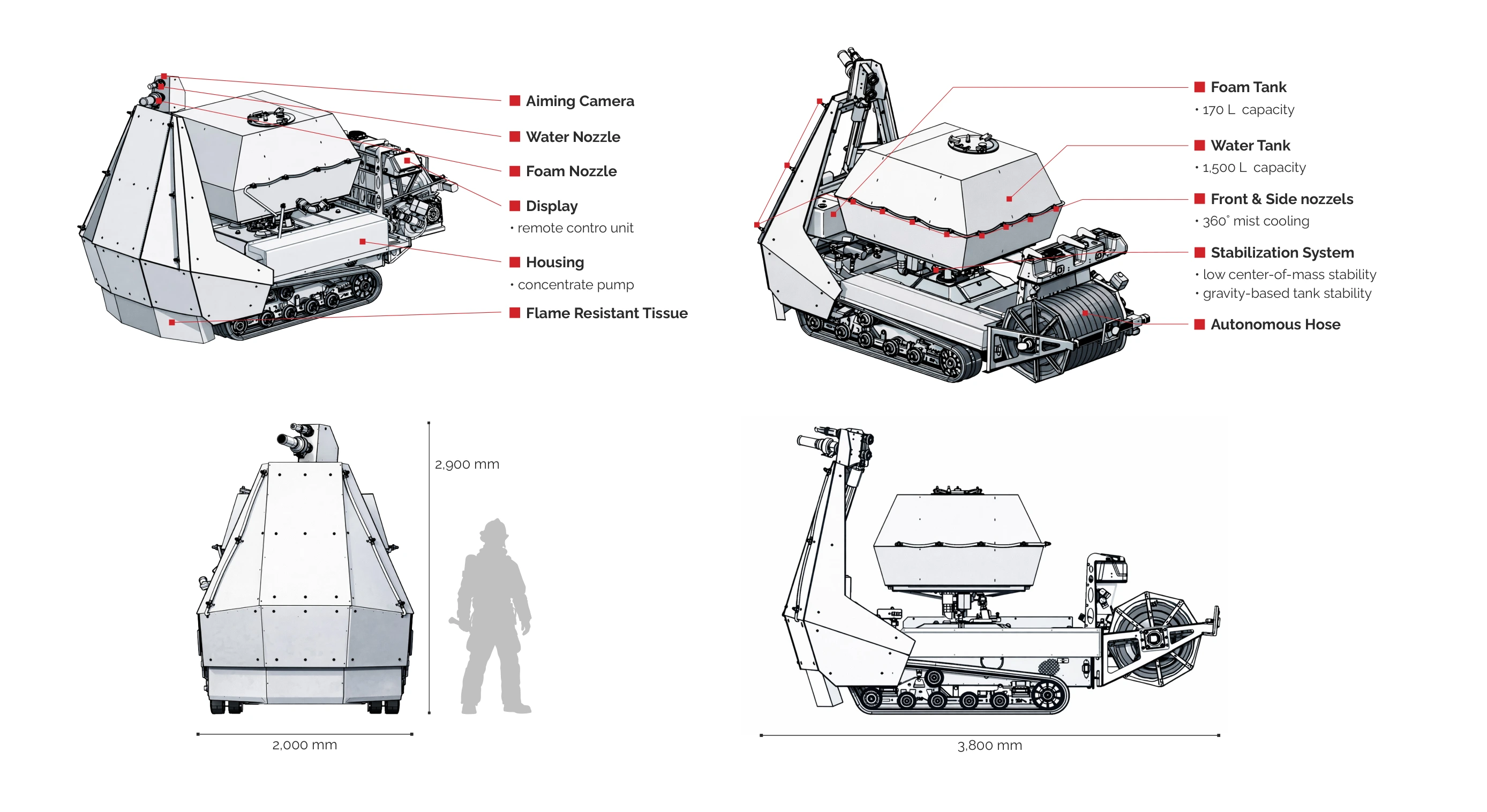
Full FFRS overview
Fire Fighting Robotic System (FFRS): Autonomous, Remote and Built for High-Risk Response
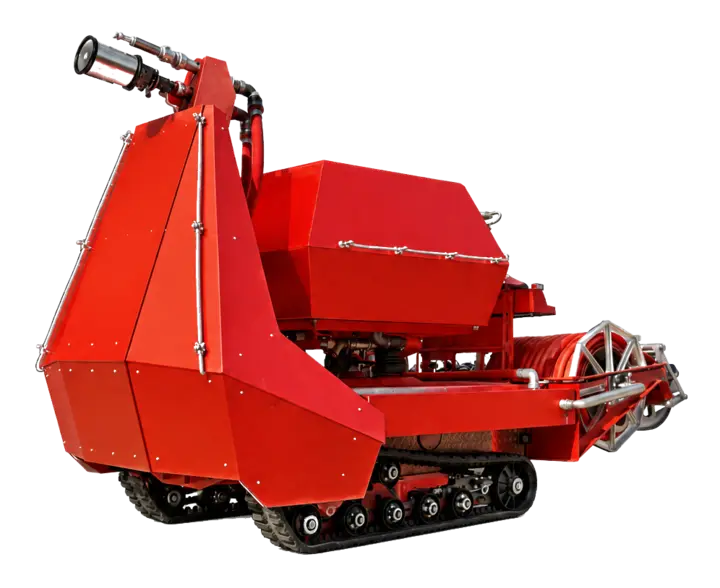
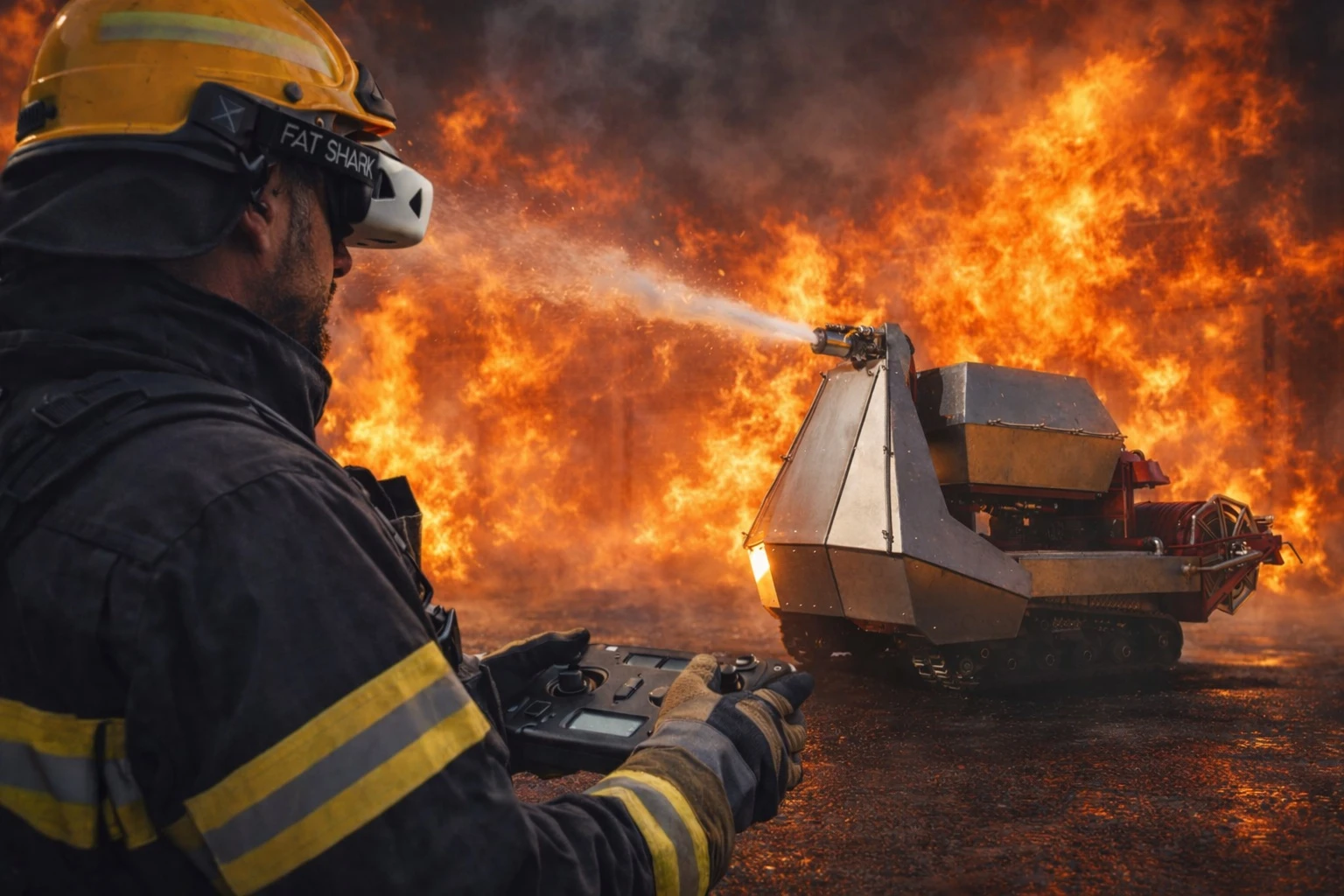
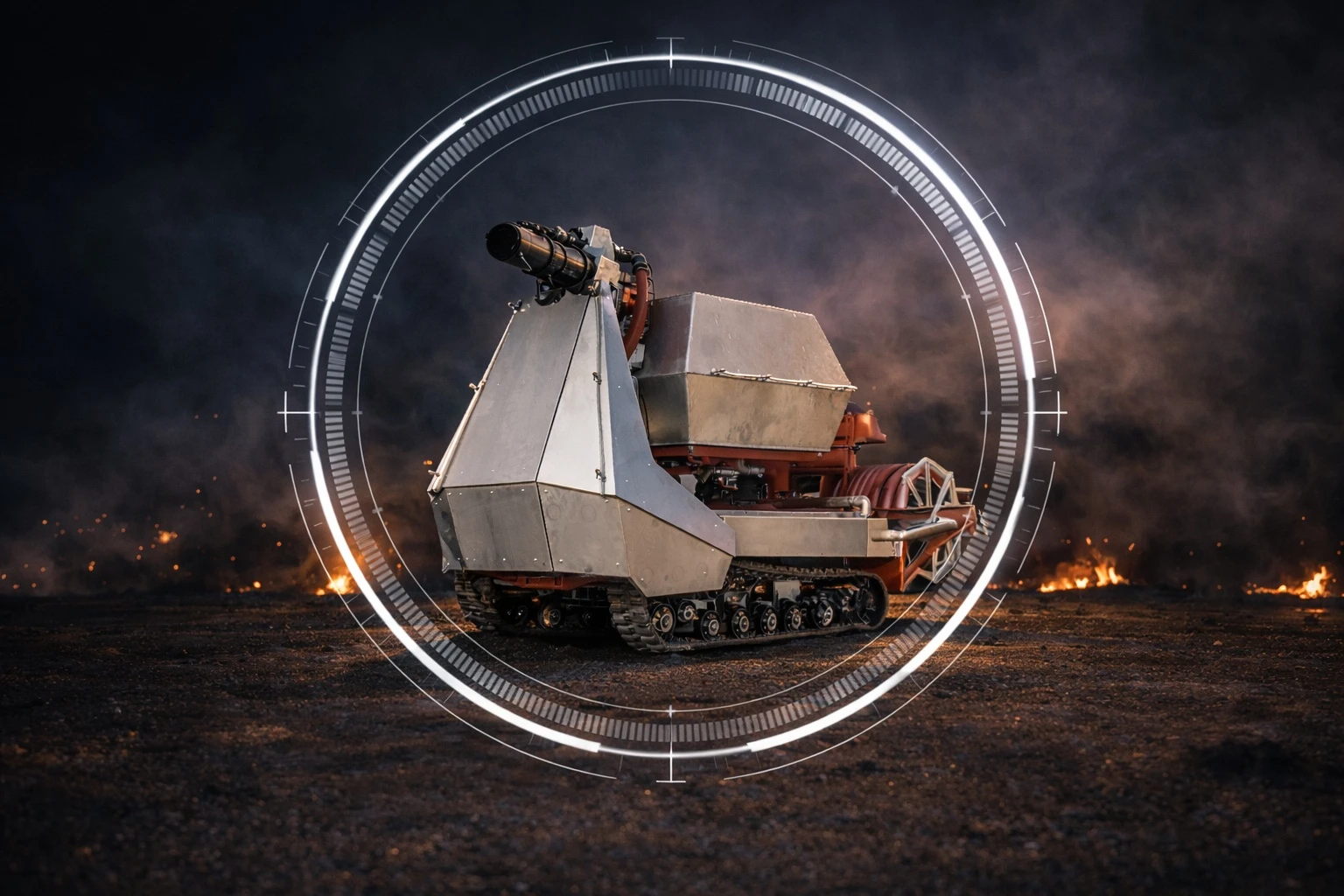
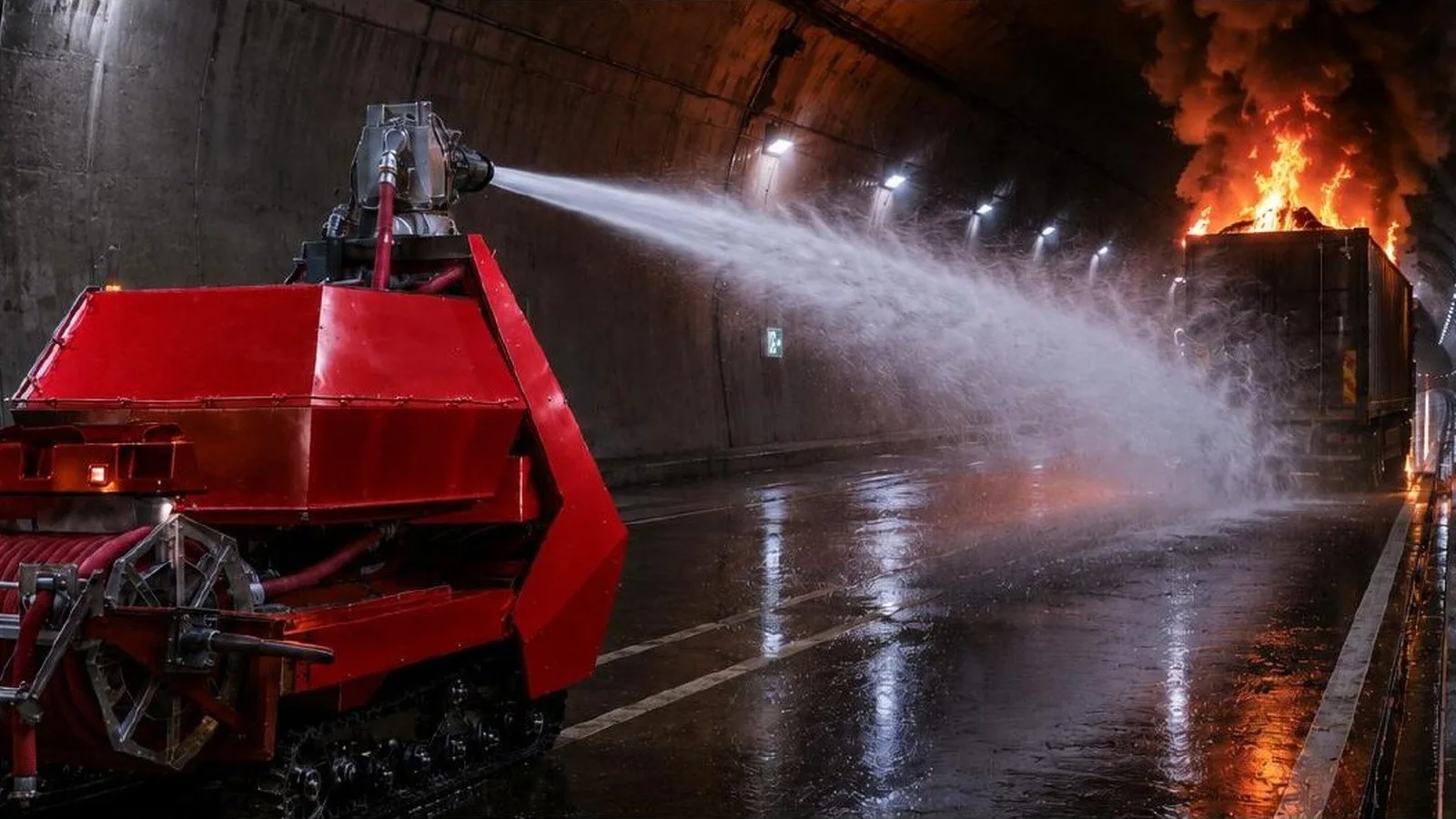
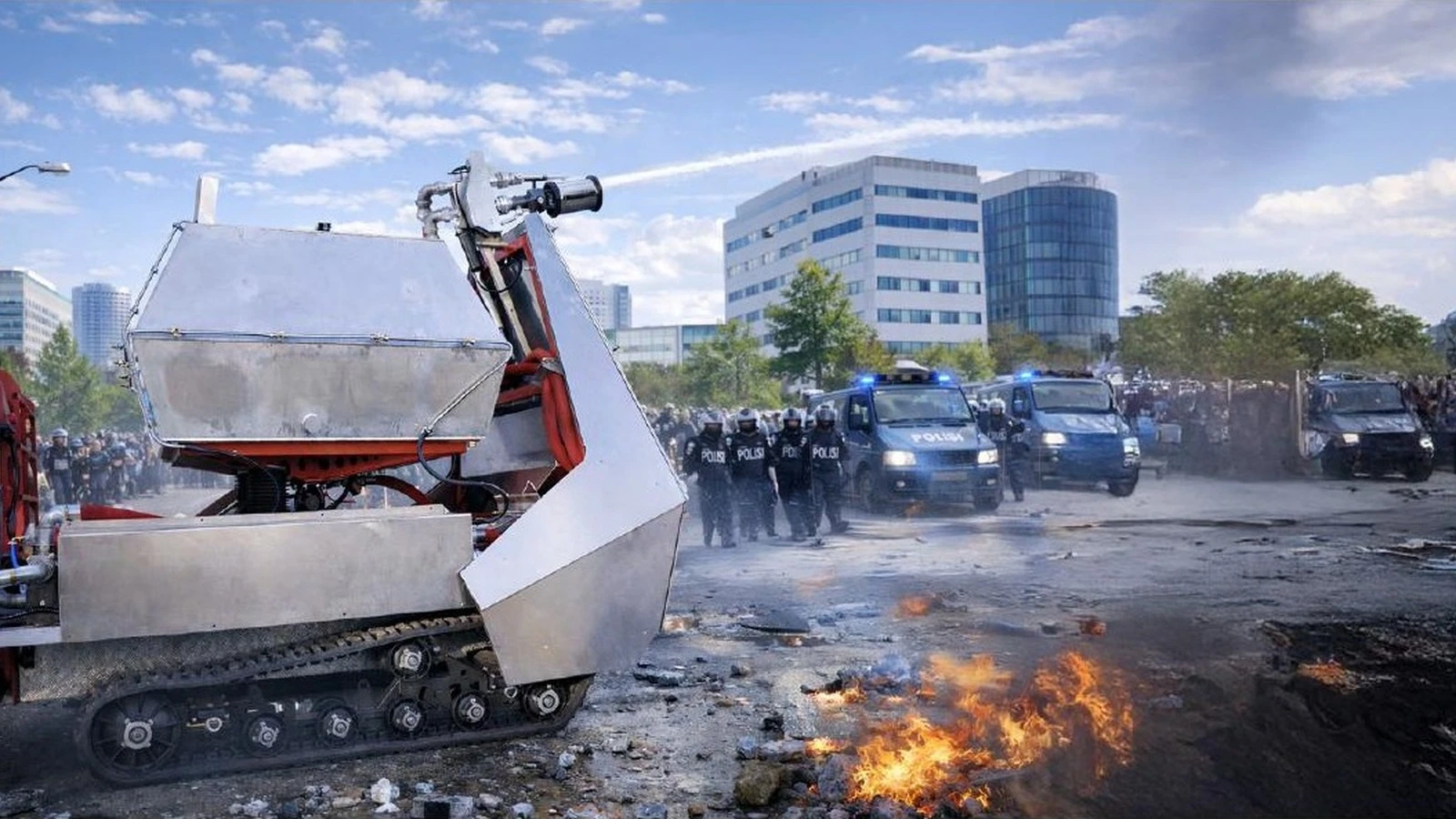
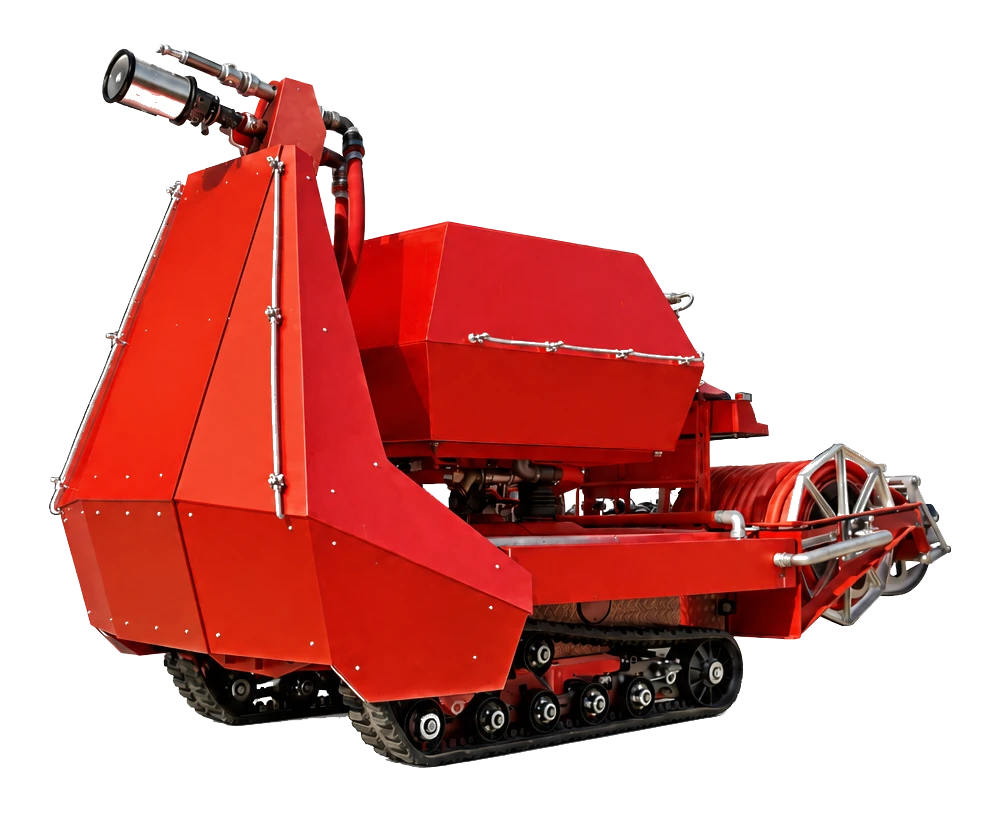
FFRS by PEK Civil Defence is a fully electric fire fighting robotic system developed to help fire services, civil-protection teams and industrial responders approach, monitor and suppress fires while keeping personnel farther from immediate hazards. The tracked platform combines autonomous functions with remote and Ground Control operation so the operating mode can be selected according to the incident, site and communications conditions. See the remote vs autonomous firefighting robot comparison.
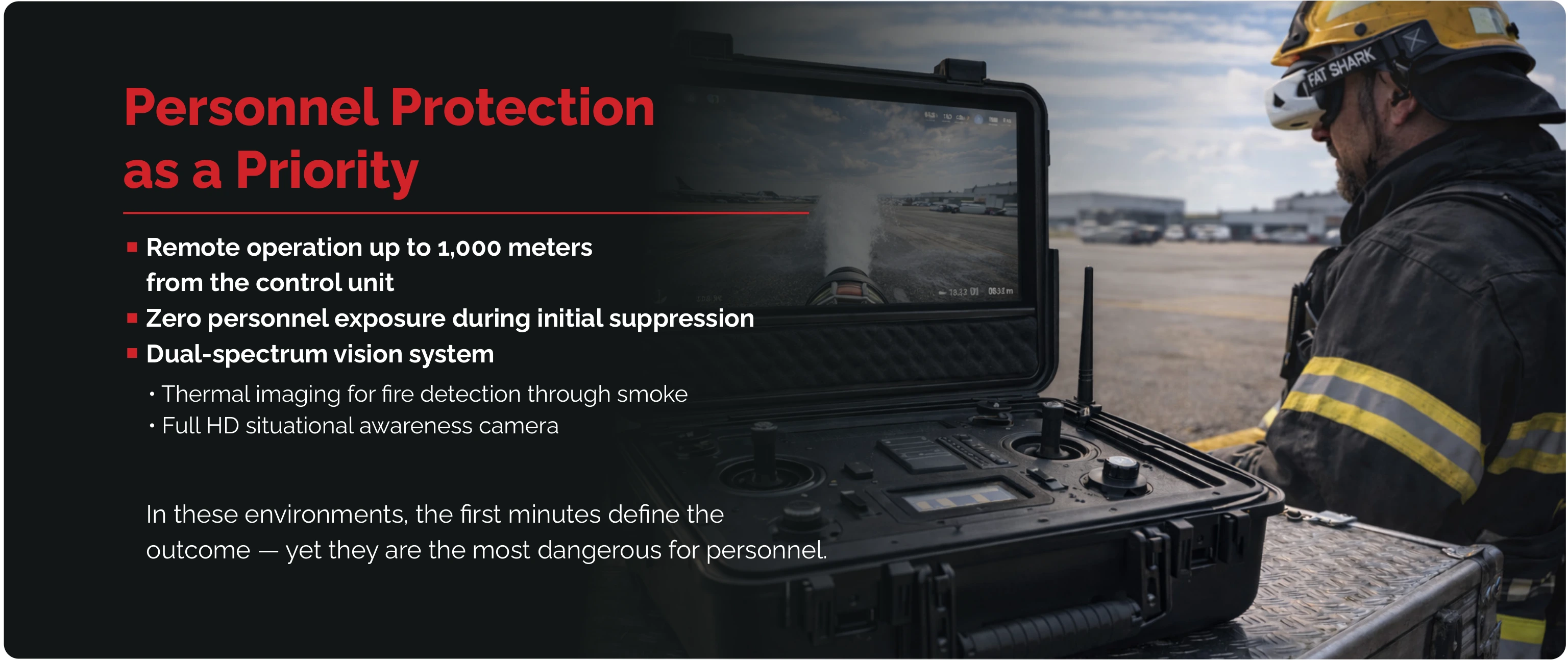
The firefighting robot carries a 1,500 L water tank and 170 L foam tank, delivers up to 340 L/min, supports an external water supply for extended operations and offers remote control up to 1,000 m line of sight under suitable radio conditions.
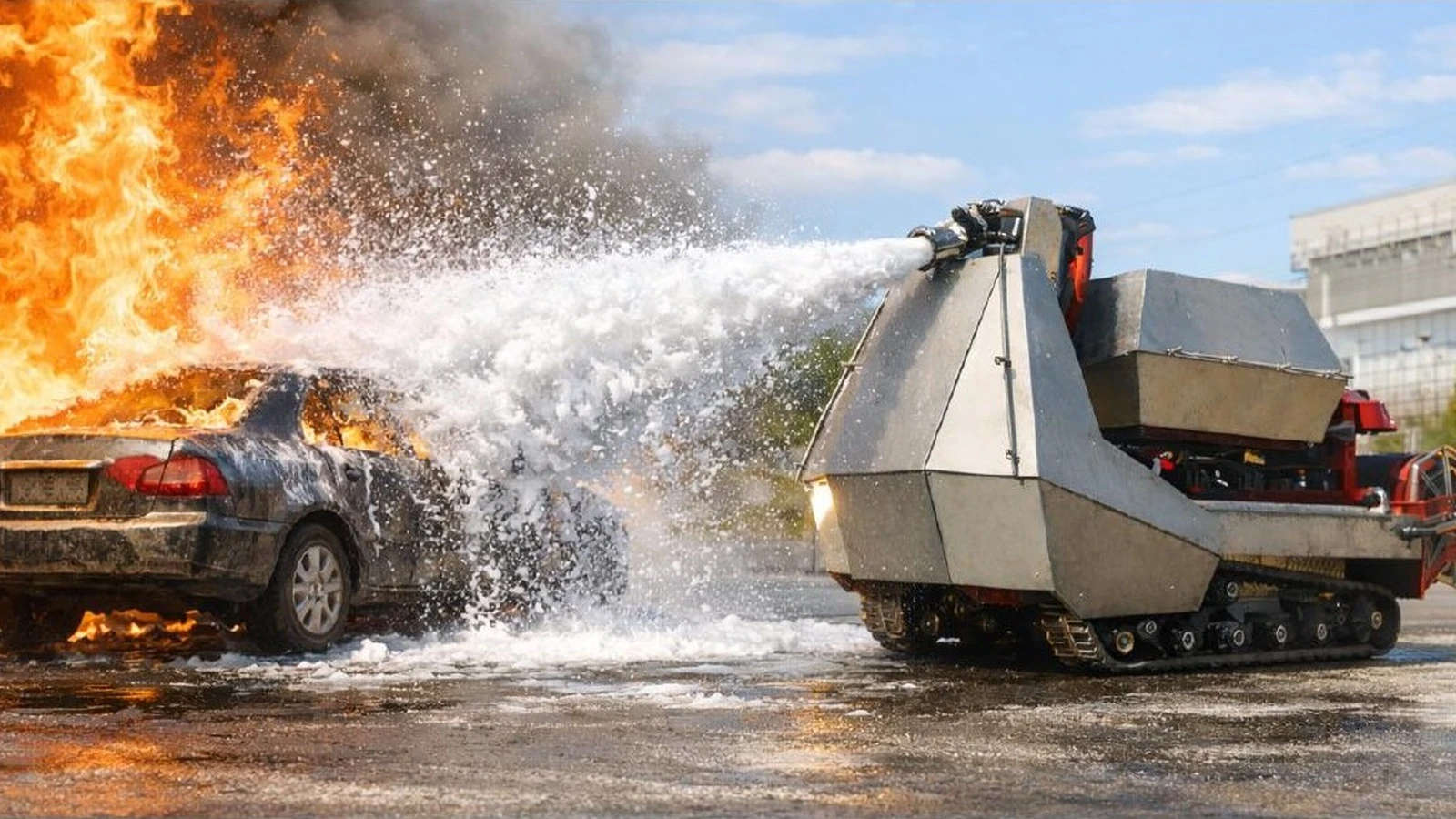
FFRS has also been evaluated in controlled testing. In the documented Class A fire and heat-radiation tests, it extinguished the Class A test fire from 10 m in 4 minutes 30 seconds using one onboard tank. During the separate heat-radiation test, thermocouples monitored the platform as it moved closer to the fire source; when the water shield was activated at approximately 90 °C, the measured temperature dropped by about 15 °C.
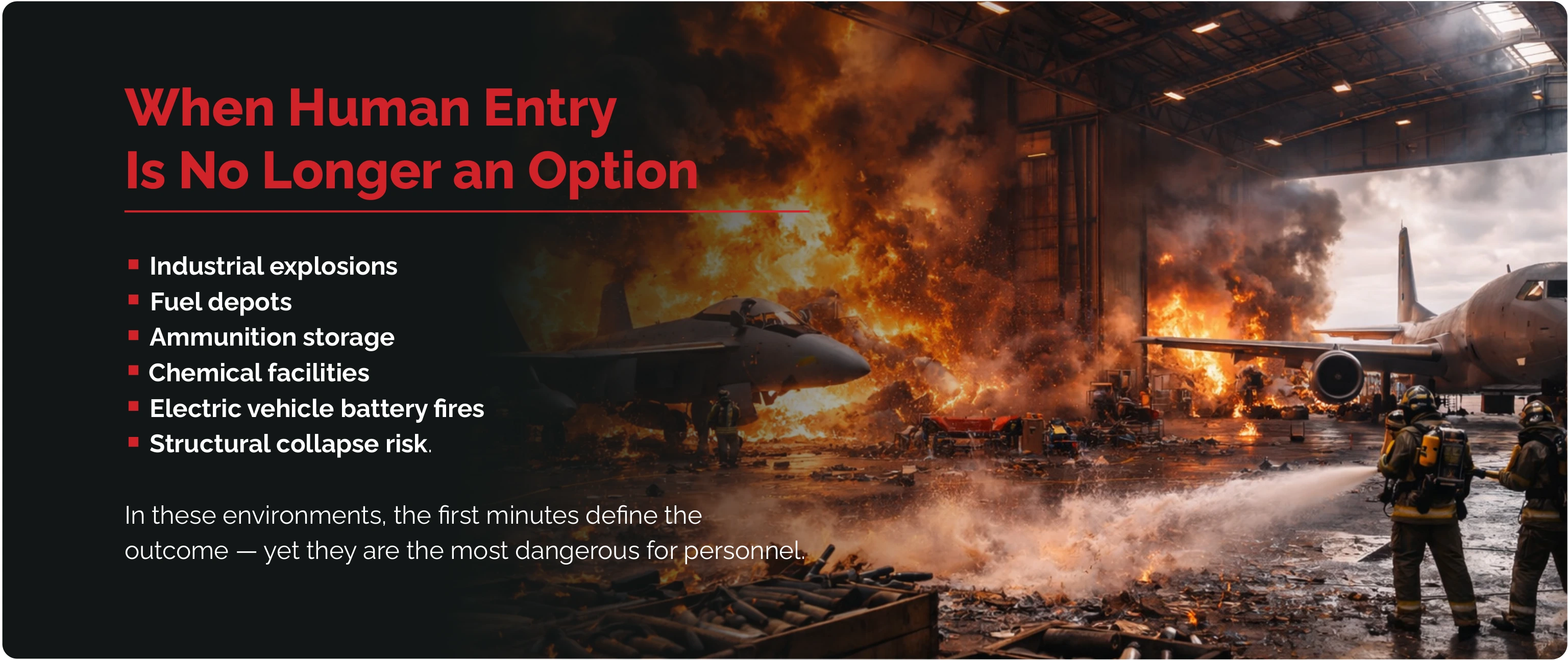
Modern fire incidents increasingly occur in environments that are too dangerous, inaccessible, or time-critical for conventional firefighting vehicles. Ammunition depots, fuel storage areas, underground garages, industrial plants and remote locations can require a system that supports immediate stand-off response without putting personnel directly into the hazard zone. Read more about firefighting robots in hazardous environments and industrial firefighting robot deployment.
The Fire Fighting Robotic System (FFRS) is a fully electric, autonomous and remotely operated robotic firefighting platform designed to meet exactly these challenges. Built on PEK Defence’s cost-effective Spektrum – base platform, the FFRS delivers the readiness of a wall-mounted fire extinguisher combined with the power and mobility of a heavy firefighting asset.
Designed for Immediate Response (under 60 seconds)
Unlike conventional fire trucks or large emergency vehicles, the FFRS fire fighting robotic system is engineered for rapid response deployment. Stored in a dedicated container or protected area, the system remains fully charged and continuously monitored. Upon alarm activation, the configured system can begin suppression in under 60 seconds, enabling personnel to engage the incident remotely and safely.
This immediate response capability is critical during the early stages of a fire, when containment can prevent escalation, structural damage, or catastrophic secondary explosions.
Independent and Self-Contained Operation
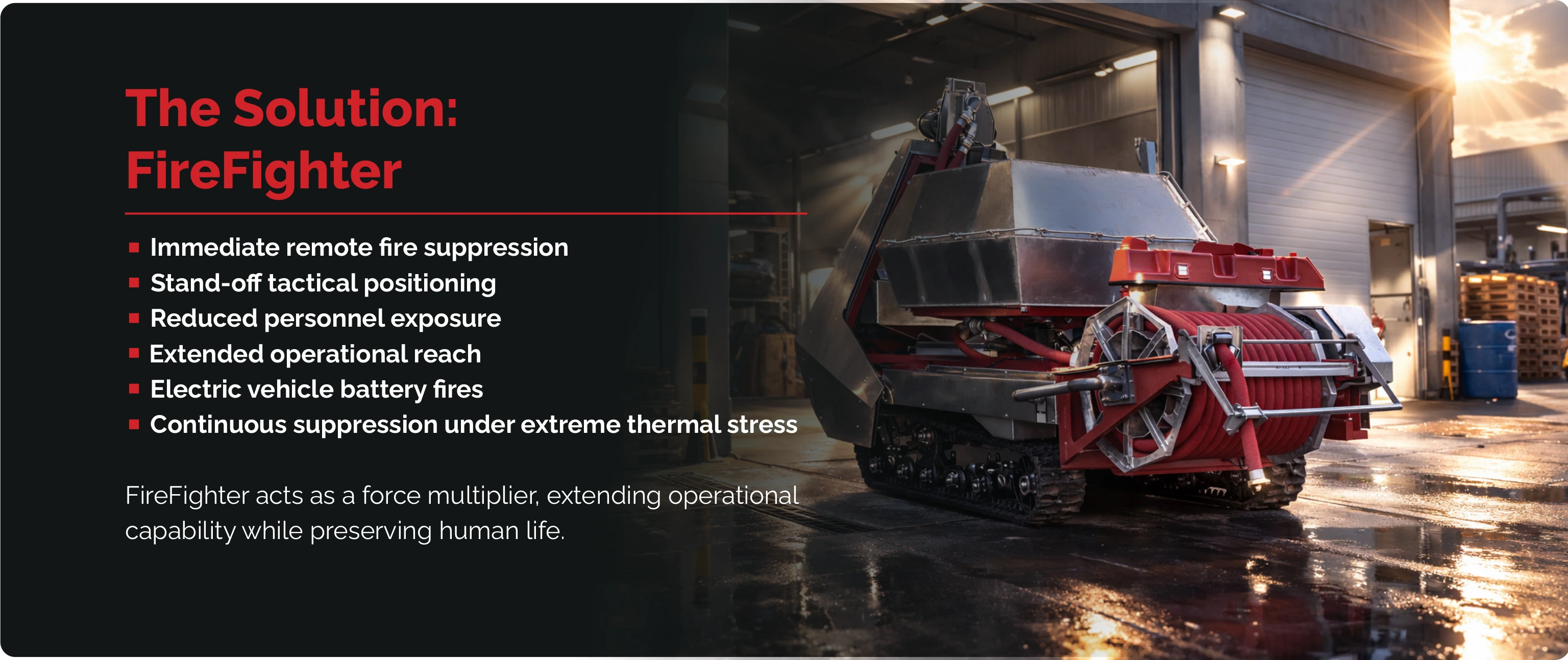
The Fire Fighting Robotic System can operate from its onboard water and foam supply without an immediate external water source, while also supporting hydrant integration for extended operations. It carries its own firefighting agents, allowing deployment in locations where water infrastructure is unavailable, damaged, or unsafe.
Key capabilities include:
- Flexible tank capacity: 1,500-liter onboard water tank with a separate 170-liter foam tank
- Integrated foam or dust systems with generator or blower
- High-pressure pump suitable for direct suppression or hose-supported operations
- Medium-expansion foam capability for industrial and fuel fires
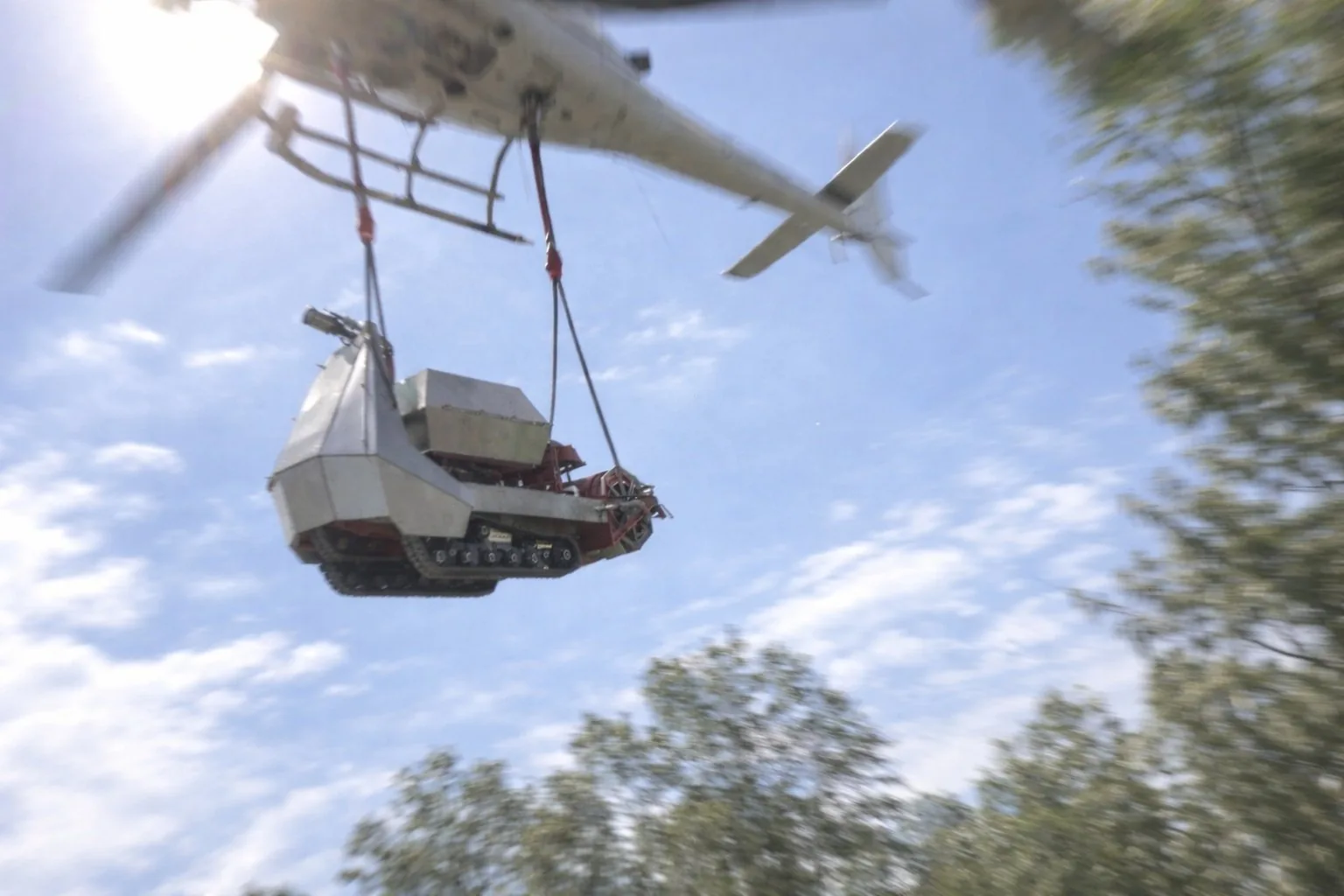
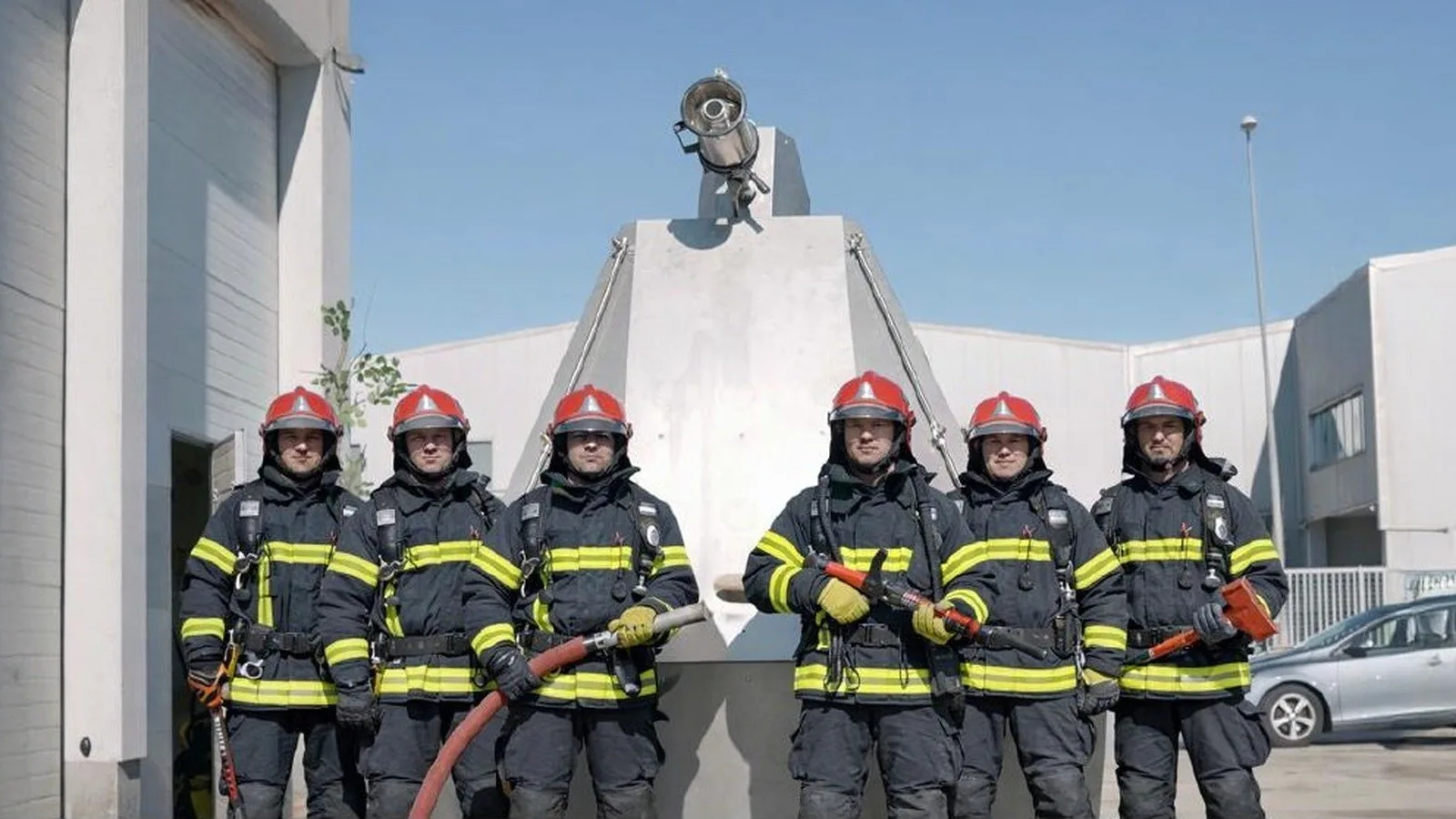
- Lightweight design, transportable with standard car trailer (B+E license equivalent) without the need for permits, convoys or heavy haulers.
This self-contained approach significantly reduces logistical complexity and shortens response time.
Mobility in the Harshest Environments
FFRS is built for environments where traditional vehicles struggle or fail. Its tracked, all-terrain chassis allows it to operate independently across mud, gravel, snow, sand, debris, and damaged infrastructure.
The tracked platform is engineered for uneven terrain and can operate on slopes up to 15° with a full tank and up to 25° with reduced load, supporting deployment on ramps, debris and damaged surfaces.
To survive extreme conditions, the platform incorporates:
- Water shield protection for high-temperature environments
- Additional air-conditioning for intake systems
- Heat-resistant shielding for prolonged exposure near active fires
Modular, Multi-Role Architecture
At the core of the FFRS is a modular system architecture, allowing rapid reconfiguration for different missions. Depending on operational requirements, the platform can be equipped with:
- Water, foam, or dust firefighting modules
- Evacuation equipment, such as winches, for vehicle removal from underground parking facilities
- Air station modules to support firefighting teams
- Additional modules for various mission profiles
Cost-Effective and Easy to Deploy
Unlike large firefighting vehicles that require specialized crews, infrastructure, and high operating costs, the FFRS is designed for affordable ownership and rapid deployment.
The robotic firefighting system is fully electric, offering low operating and maintenance costs. It can be transported using a standard car trailer with a B+E driver’s license and requires no dedicated firefighting vehicle fleet or permanent crew.
This makes it particularly suitable for industrial sites, military facilities, logistics hubs, underground garages, and remote installations.
By combining rapid response, autonomous mobility, modular firefighting capability, and digital fleet management, the FFRS provides a modern answer to today’s most complex fire risks. For background, see what a fire fighting robotic system is and where firefighting robots are used.
When seconds matter and conditions are extreme, the FFRS is ready – immediately, remotely, and without compromise.